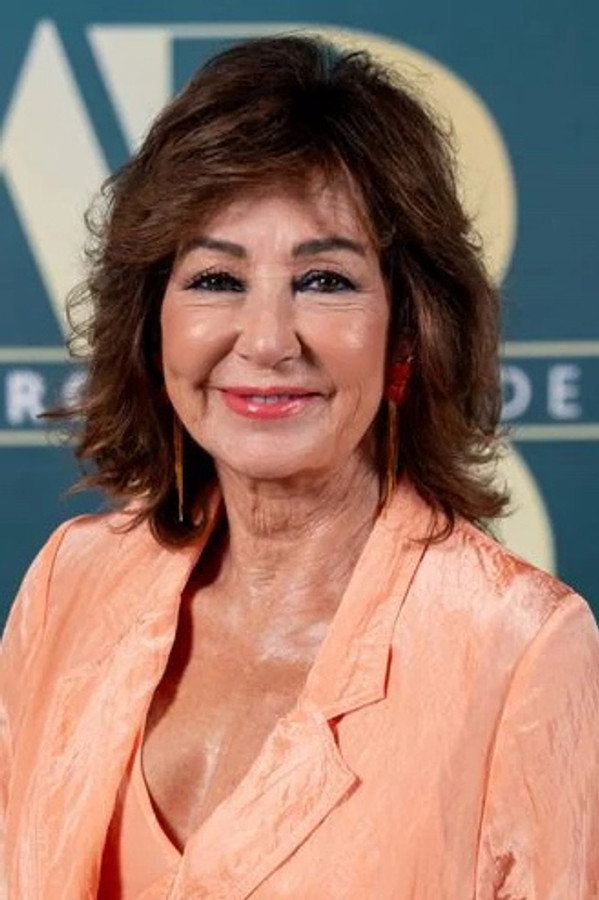
Ana Rosa Quintana was born in the Madrid neighborhood of Usera in 1956 and learned the trade when newsrooms still smelled of teletype paper and black tobacco. She studied Journalism at the Complutense University of Madrid while working grueling overnight shifts at Radio Nacional de España. In 1982, she joined Televisión Española to anchor the late-night edition of Telediario alongside Alberto Delgado, although that first romance with the public didn't last long.
She left the public broadcaster to move to New York with her then-husband, journalist Alfonso Rojo, where she worked as a radio correspondent and freelance writer. Those years abroad shaped her understanding of American television, a far more aggressive and dynamic model than the one that prevailed in Madrid. On her return to Spain, she worked at Radio Intercontinental and Antena 3 Radio before making the definitive leap to the private networks that had just broken the state monopoly.
In 1994, Telecinco asked her to host Veredicto, a format of dramatized court cases that blew past midday ratings. Three years later, she moved to Antena 3 to present Extra Rosa alongside Rosa Villacastín, an afternoon show that pioneered a bold, direct approach to social news.
Nobody at the network believed in the idea.
That formula of sofas, irony and debate about other people's lives disarmed the traditional shows in the competition. In just six months, the program topped a 25% audience share, and Quintana became the most sought-after figure in commercial television at the end of the nineties.
The Publishing Stumble and the Conquest of the Mornings
In 1998, Antena 3 handed her the entire afternoon with Sabor a ti, an afternoon magazine show that dominated its time slot for six consecutive seasons. From that set, she competed against industry heavyweights and perfected a foolproof mix: shocking crime stories, celebrities in the studio and a calculated rapport with the average viewer. But the bitterest moment of her career came in 2000, after she published the novel Sabor a hiel.
A few weeks after launch, an alarm went off because several chapters contained word-for-word plagiarism of texts by Danielle Steel and Ángeles Salvador. The publisher Planeta pulled more than 100,000 printed copies from the market in one of the biggest reputation crises in Spanish commercial publishing.
The blow was devastating.
Quintana blamed the mistakes on a technical collaborator and faced the music live to weather the media storm without giving up her afternoon show. That setback pushed her to tighten her control over everything that carried her name. In 2000, she helped found the production company Cuarzo, understanding that the real power in television lies in managing budgets, not just putting a face in front of the spotlight.
In January 2005, she sealed her move to Mediaset and took over the morning slot on Telecinco with El programa de Ana Rosa. The move dethroned María Teresa Campos, who had been unbeaten in that time slot for years, and opened an unrivaled reign of nearly two decades, powered by a morning political lineup and meticulous coverage of crime news.
The Minute Factory and the Wear and Tear of Live TV
After selling her stake in Cuarzo in 2017 due to disagreements following its integration into Banijay, she teamed up with her trusted executive, Xelo Montesinos, to create Unicorn Content. The company grew at breakneck speed until it accounted for more than 20% of all in-house broadcast hours aired on Spain's general-interest networks.
Her format lineup soon filled the daily schedule with magazine shows such as Ya es mediodía, Cuatro al día and weekend programs. So Quintana began juggling her work as a presenter with the executive oversight of hundreds of payrolls and multimillion-dollar budgets.
In November 2021, she stepped away from appearing on camera after being diagnosed with breast carcinoma. She returned to the studio in October 2022 with short hair and a restrained speech thanking her doctors. Her comeback coincided with the most unstable period inside Mediaset España, following Paolo Vasile's departure from the top executive team.
The Afternoon Trenches and the Ratings Battle
The afternoon slot was a hornet's nest.
In September 2023, Telecinco's new management abruptly canceled Sálvame and tasked Quintana with rebuilding the afternoon with TardeAR. She left the comfort of the morning behind after 18 consecutive seasons of winning the morning ratings to face direct rivals on Antena 3 and La 1.
But the afternoon audience no longer responded with the loyalty of the past. During her first full season, the format fought tooth and nail with numbers hovering around an average 10.5% audience share, far from the figures of her previous run.
In 2024, network management trimmed run times, VIP table segments and production budgets to sustain ad revenue in the face of competition from serialized drama. The production company closed that season with 65 hours a week of live broadcasting split between two networks and an average production cost per hour strictly constrained by the widespread decline in traditional TV viewing.