The Man Who Sold the Void
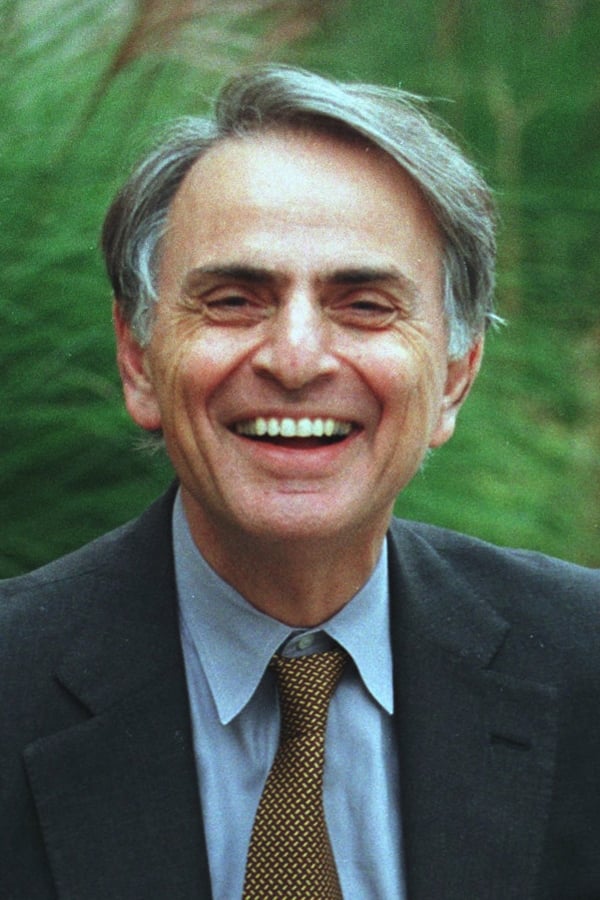
Carl Sagan never sought red-carpet stardom, yet he became the most recognizable face of science in the twentieth century. He was an astronomer who understood, before anyone else, that knowledge is worthless if it stays locked inside a laboratory at Cornell. That is why he decided to step into television.
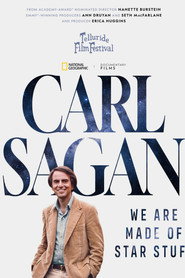
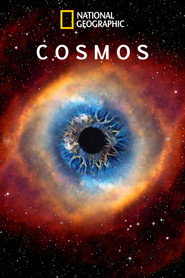
In 1980, he premiered Cosmos.
The series reached more than 500 million viewers across 60 different countries. And it did so without cutting-edge digital effects, relying solely on a narrative that blended history, biology and a contagious passion for the unknown. The production was a technical challenge for the era because it demanded a visual pace that science communication had not known until then.
Sagan was no actor, but he handled silence like a seasoned Method performer. His slow, measured voice and his ability to explain complex physics through everyday metaphors made him a mass-media phenomenon. But this media success came at a high price in the halls of academia.
Many of his colleagues turned their backs on him.
They believed a serious scientist should not stoop to appearing on high-ratings programs. So they denied him membership in the National Academy of Sciences in 1992, a blow that Sagan absorbed while staying focused on his production and writing plans. He knew that the survival of space exploration depended on the average citizen getting excited about the stars.
The Script That Took Decades to Film
His relationship with film went far beyond simple technical advising. In 1979, he began working with Ann Druyan on a screenplay treatment for a realistic science fiction film. The project stalled in the offices of the major studios because no one knew how to sell an alien story without explosions or violent invasions.
So he decided to turn it into a novel in 1985.
Contact was an immediate bestseller and reopened the doors of Hollywood. But the preproduction process was a nightmare of director changes and discarded drafts. Warner Bros took years to give the final green light to the project that Robert Zemeckis would eventually direct.
Sagan attended the rehearsals and discussed every detail of the script with Jodie Foster. He wanted the search for extraterrestrial intelligence to look like a meticulous, obsessive bureaucratic job, far from the usual space fantasies. And the gamble paid off.
The film was released in 1997 and grossed $171 million worldwide. It became the gold standard for hard science fiction cinema, directly influencing later titles such as Interstellar and Arrival. Scientific rigor was not a hindrance to the plot but the main engine of its emotion.
The Legacy of the Golden Records
Beyond the screen, his greatest work of conceptual design is now traveling beyond the solar system. Sagan led the team that decided which messages to send into space on the Pioneer and Voyager probes. He designed gold-plated copper discs with sounds of Earth, music by Bach, and greetings in 55 different languages.
It was an unprecedented work of cultural production.
Because it was not about pure science, but about choosing how we wanted to be remembered if anyone ever found those technological remains. In 1990, he convinced NASA to have Voyager 1 turn its camera around and take one last photo of Earth from 6,000 million kilometers away. The result was an image in which our world is barely a almost invisible speck of light.
He died in December 1996 of pneumonia caused by myelodysplasia. He was 62 years old. At the time of his death, the total budget of the Voyager mission he so strongly defended barely exceeded $865 million, less than it costs today to build a modern football stadium.