The Horror Hidden Behind the Screen
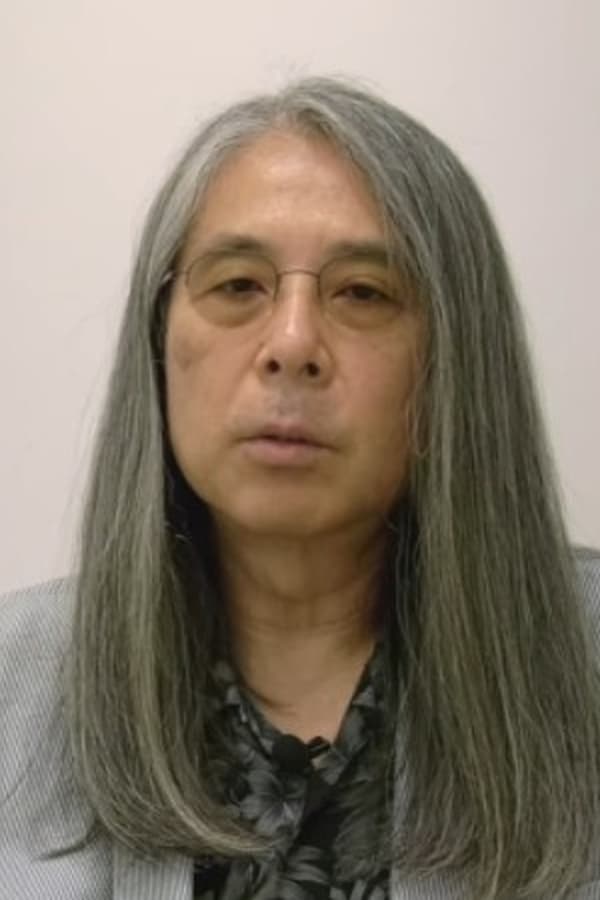
Chiaki J. Konaka was born in 1961 and grew up obsessed with British horror literature. Before writing for television, he shot experimental 16mm shorts with his brother Kazuya. They were raw pieces that already showed an unhealthy fixation on what cannot be seen at first glance.
In 1986, he worked on Gakuen Kaidan, where he began to define his dry style. He wasn't chasing the cheap scares of the era. He preferred the unease of an empty hallway or the hum of a TV with no signal. And that coolness helped him enter the anime industry through the back door.
The internet changed everything.
In 1998, he signed on to write Serial Experiments Lain. It was an odd assignment to promote a video game console, but Konaka turned it into a philosophical treatise on identity on the internet. He wrote the series while the world was just discovering 56k modems. He predicted the dissolution of the physical self before social networks existed.
But the writing process was chaotic. Konaka delivered scripts with technical notes that animators could barely decipher. The result was a dense work that forced viewers to pause the footage to read the text racing across the screen.
Generational toys and traumas
Many producers thought Konaka was only suited to the experimental niche. They were wrong. In 2001, he took on the challenge of writing Digimon Tamers and steered a children's franchise into murkier territory. He brought body horror and clinical depression into a series designed to sell trading cards.
He introduced the concept of the D-Reaper, a digital entity that erased the existence of characters. Kids of the era watched their heroes face pure nihilism. And the gamble paid off because Konaka never treated his audience as if they were stupid.
He wrote for adults who didn't yet know they were adults.
Then came The Big O in 1999. Here he blended film noir with giant robots and collective amnesia. Konaka moved away from the teen drama typical in Japan to focus on characters who wore wool suits and drank bourbon. The series flopped in its home country but became a cult phenomenon in the American market years later.
An obsession with the unknown
Konaka has always acknowledged the influence of H.P. Lovecraft on his writing. In Shadow Star Narutaru from 2003, he again used the aesthetic of friendly cartoons to hide a story of extreme violence and alienation. He isn't interested in blood for its own sake, but in the mental collapse of someone who discovers an unbearable truth.
In 2009, he announced the project Despera together with director Ryutaro Nakamura and designer Yoshitoshi ABe. It was the return of the team behind Lain. But Nakamura's death in 2013 brought production to a sudden halt, and the script sat in a drawer for almost a decade.
The silence was broken in 2021.
Konaka confirmed that year that the team was still looking for funding to bring Despera to life as an independent project. In the meantime, he devoted himself to writing novels and reviewing his production diaries from the 1990s. He still lives in a house full of occult books and outdated computer manuals.
In 2021, he published a special script for the 20th anniversary of Digimon Tamers that sparked heated debate on social media over its political references. The live reading of the script lasted exactly 45 minutes at an official Bandai event.