html
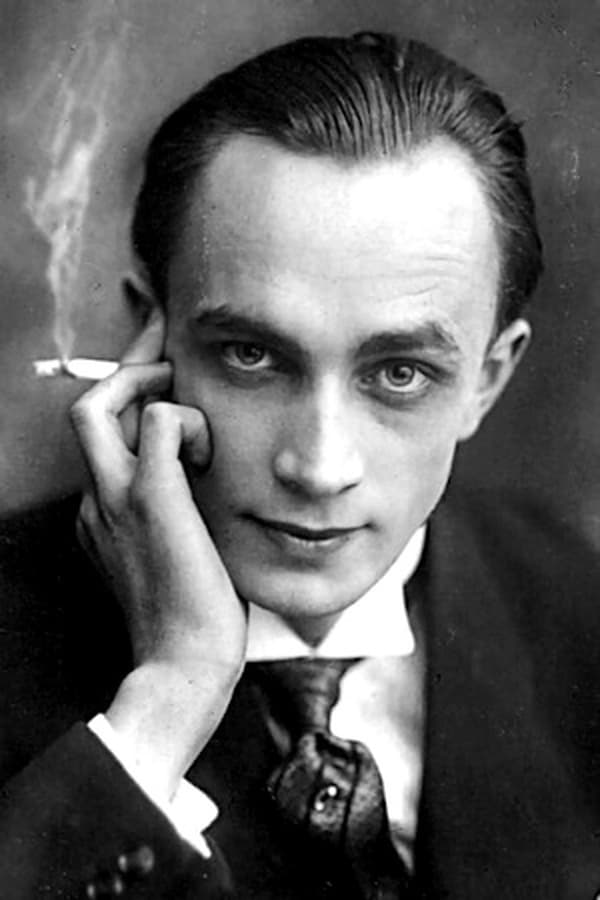
Conrad Veidt: The Face of Expressionism and Moral Elegance
Conrad Veidt (1893-1943) remains, decades after his passing, one of the most magnetic and ethically upright figures in film history. His legacy, which began in the shadows of German Expressionism and reached its peak in classic Hollywood, has experienced an unprecedented revival thanks to recent 4K restorations of his essential filmography and renewed academic interest in his firm anti-fascist stance.
The Origins of a Hypnotic Gaze
Born in Berlin, Hans Walter Conrad Veidt trained under the legendary Max Reinhardt. His angular features and his ability to convey unsettling vulnerability made him the go-to actor for embodying the nightmares of the Weimar Republic. His performance as Cesare in The Cabinet of Dr. Caligari (1920) not only defined the aesthetics of modern horror cinema but also set the standards for body language on the big screen.
Key works followed this milestone, such as The Hands of Orlac (1924) and, most notably, The Man Who Laughs (1928). In the latter, his portrayal of Gwynplaine not only demonstrated his technical mastery by acting through a permanent facial prosthesis, but also directly inspired the creation of the Joker, the iconic DC Comics villain, whose enduring presence in popular culture still inevitably recalls Veidt's tragic smile.
Political Commitment and Golden Exile
Unlike many of his contemporaries, Veidt used his star status to confront the rise of Nazism. Married to Ilona Prager, who was of Jewish origin, he identified himself as Jewish on official regime forms as an act of defiance and solidarity. His escape to Great Britain and his later move to the United States marked a period of interpretive maturity.
In Hollywood, despite his aversion to the German regime, he agreed to play Nazi officers on the condition that they always be portrayed as villains or contemptible figures. This resolve gave us his most memorable role for the general public: Major Strasser in Casablanca (1942). His icy, aristocratic presence served as the perfect counterpoint to the heroic cynicism of Humphrey Bogart.
Relevance and Legacy of an Eternal Icon
In recent film news, Conrad Veidt's legacy has enjoyed an astonishing resurgence. The completion of the restoration project for the “Veidt Collection” by the Berlin Film Archive and various international institutions has allowed new generations to discover lost or deteriorated films, including his early silent-era collaborations on social themes and civil rights.
In addition, production has been confirmed for an ambitious biopic that will explore his humanitarian work and his role as an informal spy for British intelligence during his years in London. This project, along with the digitization of his personal archives, positions Veidt not only as a cult actor but as a benchmark of artistic and personal integrity. His influence is evident in the aesthetics of contemporary directors who seek in chiaroscuro and physical performance an alternative to the dominance of digital effects.
Notable Filmography and Restoration Projects
- The Cabinet of Dr. Caligari: Definitive restored edition with orchestrated original soundtrack.
- The Man Who Laughs: Re-release in art house theaters with HDR technology.
- Casablanca: Ongoing preservation as a cornerstone of refugee cinema.
- The Thief of Bagdad: His foray into Technicolor, recently remastered for high-definition platforms.