Show business politics in Hanover
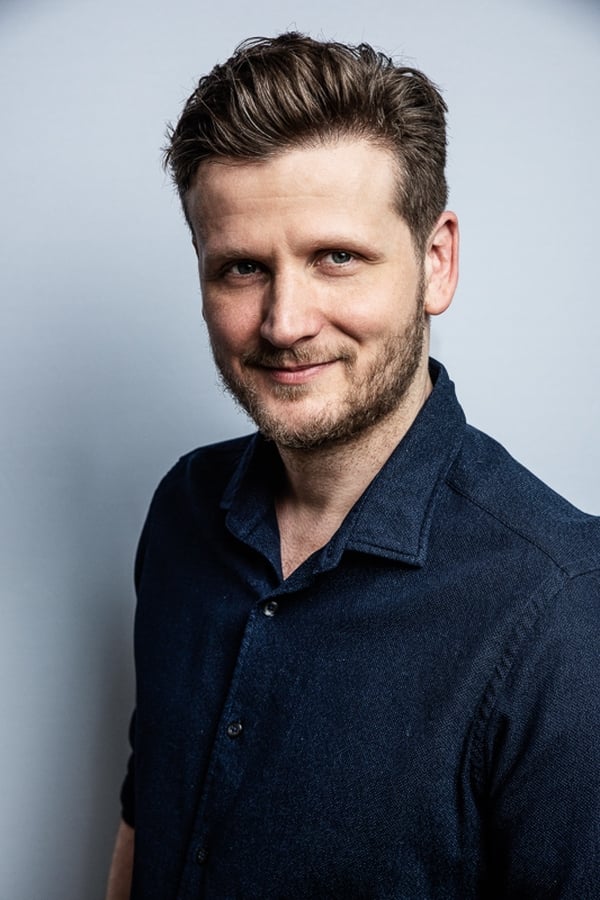
Dennis Gansel was born in 1973 and grew up in a Germany still trying to digest its own past. While other directors of his generation got lost in contemplative auteur cinema, he decided political messages go down better with a good visual wrapping. He studied at the prestigious HFF in Munich (the same school as Wim Wenders), but his gaze was always fixed on the other side of the Atlantic.
His debut came at the turn of the millennium. In 2001 he released Mädchen, Mädchen, a teen comedy that surprisingly did well at the box office. But that commercial success was only a means to an end. Gansel needed funding and a name to make the stories about uniforms and manipulation that truly haunted him.
Then came the chance to face the Third Reich head-on.
In 2004, he premiered Napola. The film dissected the Nazi elite schools where future leaders of the regime were trained. The director moved away from moral black and white to show how the system seduced young people through sport and camaraderie. It won the German Film Award for Best Screenplay and proved that one could address the war without relying on the clichés of the afternoon historical drama.
The wave phenomenon and the leap into the void
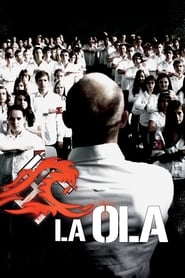
The name of Dennis Gansel became etched in collective memory in 2008. He adapted Ron Jones's sociological experiment to make Die Welle (The Wave). The premise was simple: a high school teacher tries to explain autocracy by creating a fascist movement in his own class. What starts as a game ends in tragedy, wrapped in a music-video aesthetic and a frenetic rhythm.
The film was a cultural earthquake in Europe.
It was screened in schools across the continent and grossed over $30 million worldwide. Gansel got teenagers interested in mass psychology without it feeling like a boring history lesson. But that success typecast him for a time as the director of social thesis films.
He tried to break the mold with Wir sind die Nacht in 2010. It was a risky bet on modern vampire cinema in a nocturnal, electronic Berlin. Despite its impeccable technical craft, the film didn't connect with audiences in the same way. So he decided it was time to try his luck in the American studio system.
The Hollywood experience was bittersweet.
In 2016 he directed Mechanic: Resurrection, a pure action sequel starring Jason Statham and Jessica Alba. It was his most impersonal project but also his most profitable worldwide. The film grossed over $125 million at the box office. Gansel learned to handle huge budgets and complex digital effects there, although the script lacked the depth of his German works.
Back to fantasy and psychological thriller
After the bombast of American explosions, Gansel returned to Germany to take on a major technical challenge. Between 2018 and 2020, he adapted Michael Ende's book for Jim Knopf und Lukas der Lokomotivführer and its sequel. They were the most expensive productions in German film history up to that point, with a display of visual effects unprecedented in the European industry.
But the director never gave up his interest in oppressive atmospheres and family secrets. In 2024 he released Berlin Nobody, a psychological thriller produced by Ridley Scott and starring Eric Bana and Sadie Sink. The story dives into the world of cults in contemporary Berlin, recovering the dark tone that defined the early years of his career.
Gansel still lives in Berlin and runs his production company Rat Pack to oversee his projects from home base. His working method is based on meticulous planning of the staging before he steps onto the set. The final cut of Berlin Nobody was locked at exactly 94 minutes.