The Man Who Escaped the Myth
In 1970, Paul McCartney slipped a press release into the promotional copies of his first solo album. He didn't announce the Beatles' breakup with big headlines. He simply answered a series of questions in which he confirmed he didn't miss working with the group. That gesture marked the start of one of the longest professional comebacks in the music industry.
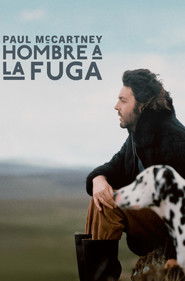
McCartney didn't want to be a relic of the sixties. He moved to a farm in Scotland and started recording animal sounds and raw acoustic guitars. That was the seed of McCartney, an album on which he played every instrument and which critics of the time tore apart for its lack of ambition.
The industry thought he had lost his mind.
But the musician was looking for a real band structure away from the spotlight of London. In 1971, he founded Wings with his wife Linda and guitarist Denny Laine. They went from filling stadiums with the Beatles to touring British universities in a van, without telling anyone, to play for two hundred people.
The success of Band on the Run in 1973 came after a disastrous recording trip to Nigeria. They were held at knifepoint and robbed of the original demos of the songs. McCartney had to rebuild the arrangements from memory in a rundown studio in Lagos while suffering asthma attacks brought on by the climate.
Technology as a Toy
His relationship with film always had an element of technical experimentation. In 1966, he composed the score for The Family Way, seeking an orchestral language that moved away from pop. Years later, in 1984, he wrote and starred in Give My Regards to Broad Street, a film that flopped at the box office but whose soundtrack sold millions of copies.
And the gamble paid off.
In 1980, he released McCartney II, using sequencers and synthesizers when they were still experimental machines. It was a solo album that the public ignored for being too strange. Decades later, that sound became the foundation of the electronic pop that dominated the charts.
McCartney has never stopped recording new material under an iron discipline. In 2020, he used the lockdown to complete his self-titled trilogy with McCartney III. He recorded all the tracks in his Sussex studio during what he called the Rockdown to avoid creative paralysis.
The pace of his work didn't slow down with age.
In 2024, his Got Back tour played stadiums across Europe and America with a technical production that included sound restoration processes. The technology made it possible to recover John Lennon's voice from an old tape so the two could sing together live. It wasn't a digital re-creation but a frequency cleanup applied to an original analog track.
In 2025, the album One Hand Clapping was officially released after spending fifty years in the record label's archives. The album hit number one on the vinyl charts in its first week of release. Paul McCartney personally oversees every reissue of his catalog from his office in Soho Square, where he manages a fortune exceeding 1,200 million British pounds.