Willis Bouchey: The Unshakable Face of Classic Hollywood
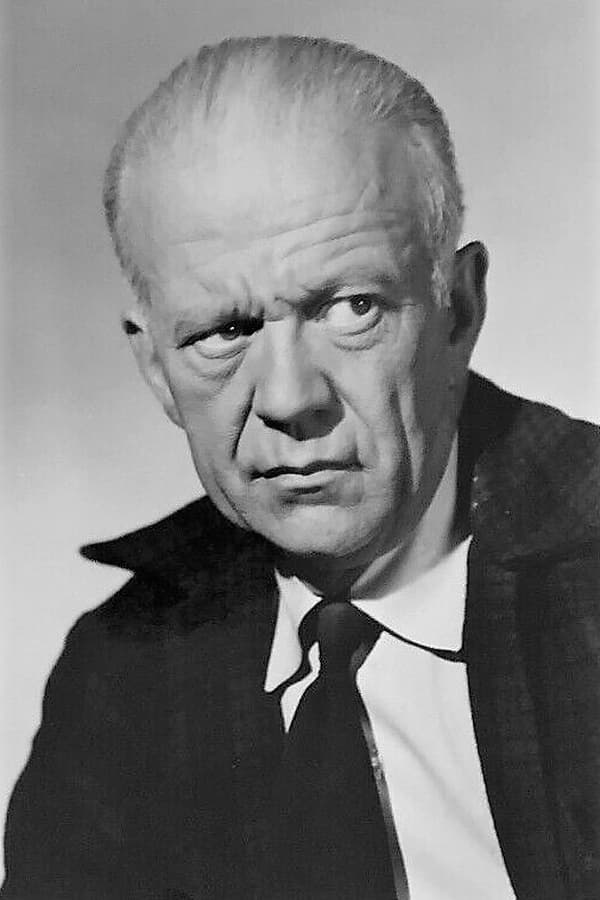
In the history of American cinema, few names capture the figure of authority, integrity or bureaucratic cynicism as precisely as Willis Bouchey. Although his name did not always top the marquees on Broadway or movie premieres in Los Angeles, his screen presence was a cornerstone for directors of the caliber of John Ford and Fritz Lang. As a writer specializing in film, it is essential to revisit the work of this supporting actor, whose filmography continues to be studied and restored in the midst of the boom of 4K and collector-focused film platforms.
Born in Michigan, Bouchey did not drift into film by chance. He first built a solid foundation in radio, where he developed a deep voice and impeccable diction that later became his trademark. His move to the big screen came in his mature years, allowing him to specialize in roles of institutional weight: judges, colonels, sheriffs and politicians.
The Ford Stamp and the Nobility of the Supporting Actor
What truly defines Bouchey's career is his membership in the legendary “repertory company” of John Ford. The director, known for his loyalty to a select group of performers, found in Bouchey the perfect counterpoint to stars such as John Wayne and James Stewart. His work in landmark films like The Man Who Shot Liberty Valance (1962) and Misión de audaces (1959) was more than a mere presence; Bouchey brought a social realism that grounded epic stories in the everyday world of law and order.
Still, his versatility allowed him to move beyond the western. In film noir, he stood out under the direction of Fritz Lang in The Racket (1953), where he proved he could handle urban, seedy settings with ease, far from the dusty prairies. His ability to add nuance to characters who might otherwise seem flat on paper is what, with the perspective of time, elevates his status to that of a master of supporting performance.
Legacy and Restoration Projects Today
As we move through this decade, interest in Willis Bouchey has seen a renewed revival thanks to film archives and publishers specializing in classic cinema. The recent digital restoration of much of the Columbia Pictures and Warner Bros. catalog has allowed new generations of movie lovers to appreciate Bouchey's subtle physical presence in a fresh, high-definition light.
Among the confirmed projects keeping his memory alive are special collector's editions featuring essays on the “essential faces” of Golden Age cinema. Likewise, various retrospectives at cultural centers in Madrid and Barcelona have revisited his lesser-known work on television in the 50s and 60s, including his appearances on Perry Mason and The Twilight Zone, proving that his talent knew no boundaries between formats.
A Legacy That Transcends the Screen
Willis Bouchey passed away in 1977, but his work remains a masterclass in how to hold the frame without big gestures. In an industry that often gets lost in artifice, Bouchey's restraint serves as a reminder of the essence of cinema: the truth of the actor in front of the camera. For any true film lover, revisiting his filmography is not just an exercise in nostalgia but a necessity for understanding the foundations on which contemporary visual storytelling was built.