Editing as a Scalpel
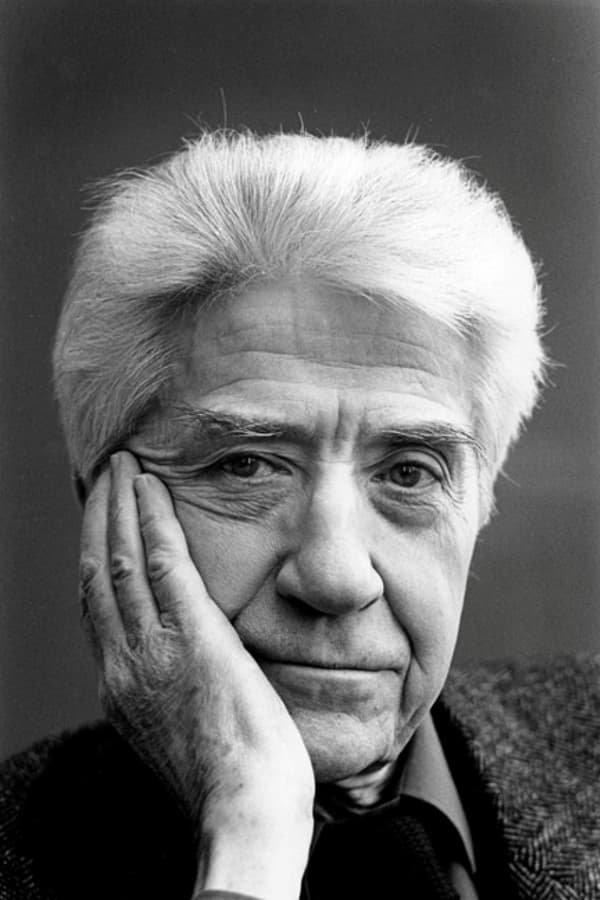
Alain Resnais began shooting on 16mm at age fourteen. He did not aim to capture reality but to reconstruct it through an obsessive control of rhythm and editing. His early documentary work already hinted that his gaze would not be comfortable for the average postwar viewer.
In 1955 he premieres Night and Fog. It is a commission about the Nazi concentration camps that avoids sentimentality to focus on the cold architecture of horror. What truly hits home, however, is how it alternates color with black and white to address forgetting. Memory is the great theme of his filmography, and here he dissects it with almost surgical precision.
He was never interested in linear reality.
Four years later he presents Hiroshima mon amour at the Cannes Film Festival. Marguerite Duras's screenplay and Resnais's direction shatter the traditional narrative structure. The film blends atomic trauma with a fleeting love story in a choreography of time jumps that baffled critics of the era.
And the gamble paid off.
Resnais set himself apart from his fellow French New Wave filmmakers by joining the Left Bank group. While others pursued the spontaneity of the handheld camera, he preferred formal rigor and collaboration with experimental writers. For this director, cinema was a language that had to learn from literature and music.
Labyrinths of Time and Songs
In 1961 he releases Last Year at Marienbad. It is a visual puzzle shot in a luxury hotel, where characters look like statues trapped in a loop of doubtful memories. There is no logical explanation for what happens on screen. The viewer must accept the game or walk out of the theater, because Resnais refuses to spoon-feed answers.
During the seventies and eighties, his style became more sophisticated but less hermetic. In 1977, he shot Providence, his first English-language film and a fascinating study of the creative process of a dying writer. Here, the editing shows how imagination distorts the reality of the protagonist's family members.
But his career takes a playful turn in the nineties.
With On connaît la chanson in 1997 he achieved an unexpected box-office hit, using popular French songs that the actors lip-sync during moments of emotional tension. It is a tangled comedy that hides a deep melancholy about urban loneliness. The film won seven César Awards and proved that his cinema could be intellectual and popular at the same time.
Despite his advanced age, he maintained an enviable work ethic. In 2006, he directed Cœurs, using artificial snow as a dramatic device that isolates his characters in a desolate Paris. His shoots were known for the loyalty of their crew and a group of recurring actors who understood his visual codes.
In 2014 he presented Aimer, boire et chanter at the Berlin International Film Festival, where it won the Alfred Bauer Prize. The film is a stage adaptation that plays with cardboard sets and comic-book drawings to underline the artificiality of art. Resnais died in Paris on March 1, 2014 at age 91, while working on the screenplay for his next project.