The Man Who Revived a Bankrupt Studio
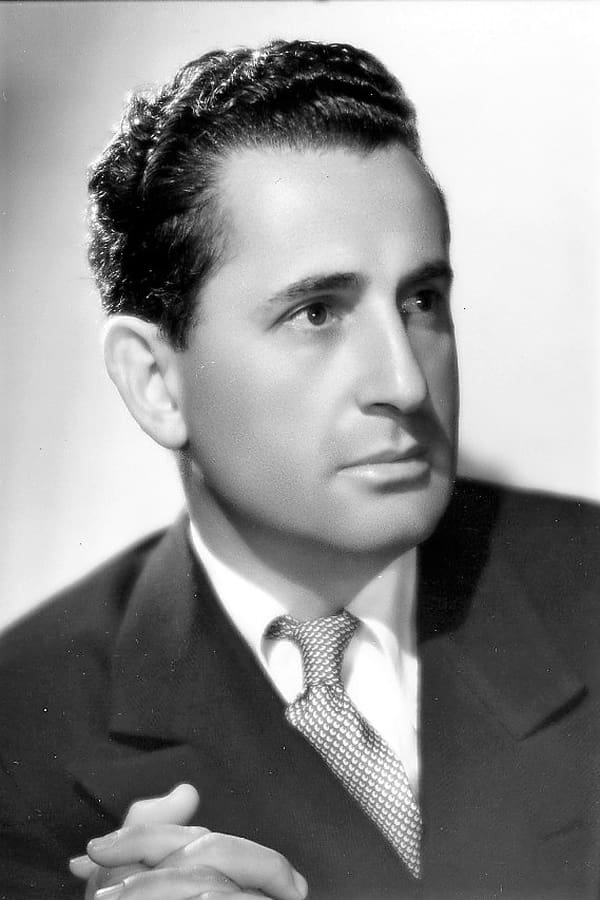
Arthur Lubin was born in Los Angeles in 1898, surrounded by the industry he would eventually dominate. He started his career as a stage and silent film actor under the name Arthur William Lubin. But his real strength was behind the camera, where he applied an iron discipline learned on the stage.
His first real break came in 1934 with A Successful Failure. It was a modest production that left little room for creativity. Lubin simply delivered on schedule and within budget, earning a reputation as a dependable director that would stay with him for good.
And the gamble paid off.
In 1941 he directed Buck Privates. The film earned 4 million dollars at the time and kept Universal Pictures from closing its doors due to a cash shortage. Lubin had to deal with the constant chaos of Bud Abbott and Lou Costello, who improvised nonstop during the shoot.
That film launched a streak of five consecutive movies with the comedy duo. But Lubin didn't want to be just the babysitter for two comedians. The filmmaker was looking for projects where technique and color mattered more than pie-in-the-face gags.
From Technicolor Horror to Animal Comedy
In 1943 he took on Phantom of the Opera. It was the only Universal horror film shot in Technicolor during that golden era. The budget soared to 1.75 million dollars due to the complexity of the sets recreating the Paris Opera.
Lubin insisted that the music be the central axis of the plot. He wasn't after the cheap scares of earlier versions. So he cast Claude Rains to bring to life a more human and tragic ghost than Lon Chaney's.
But fate had a strange turn in store for him, leading him into cinematic animal stories. In 1950, he released Francis, the story of a mule that talked with a soldier during the war. The success was so absurd that he directed six consecutive sequels before growing tired of the format.
Lubin knew audiences wanted to escape the realities of the postwar era.
In 1951 he directed Rhubarb, a comedy about a cat that inherits a baseball team. He didn't care about the intellectual prestige of his stories. He only cared that the comedic machinery worked with the precision of a Swiss watch.
The profitability of the talking horse
In 1961 he made his definitive leap to television with Mister Ed. The series about the talking horse stayed on the air until 1966 and became a massive cultural phenomenon. Lubin owned part of the show's rights, which guaranteed him a golden retirement far from the pressures of the major studios.
And that's how he bowed out of the front line.
His last film for the big screen was Rain for a Dusty Summer in 1971. The shoot in Mexico was difficult and had nothing to do with the luxuries of his years at Universal. After that project, he focused on directing individual episodes for television series before retiring for good.
Lubin never chased critical acclaim or Academy Awards. He saw cinema as a public service of entertainment. For him, a film set was a dream factory that had to deliver its product on time.
He died in Glendale in 1995 at the age of 96 from natural causes. His ashes were scattered at sea off the coast of California.