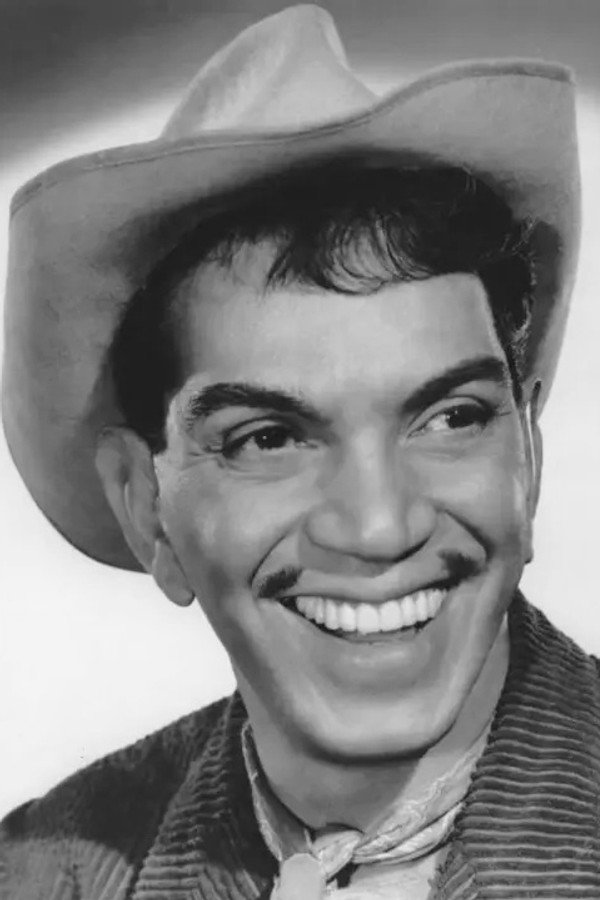
Mario Moreno stepped into a professional boxing ring in Mexico City before turning twenty and was knocked out in the first round. He hung up his gloves that very same night. He tried his luck as a cobbler, mail carrier, ballroom dancer, and private in the federal army until he discovered the traveling tent shows of the working-class neighborhoods. In those canvas theaters with rotting wooden planks, the character was born: trousers sagging at the hips, a rope for a tie, and a filthy raincoat slung over one shoulder.
In 1936 he made his big-screen debut with a minor role in No te engañes corazón, a low-budget film directed by Miguel Contreras Torres that passed through Mexican theaters without much notice. Four years later, Juan Bustillo Oro called on him to lead the cast of Ahí está el detalle. The film cost about sixty thousand pesos at the time and packed theaters, thanks to a twelve-minute courtroom scene in which his character drove the judge up the wall with a nonsensical speech.
Nobody understood a thing, but everyone laughed.
That verbal gibberish was no accident but a calculated technique that Mario Moreno perfected night after night before the working-class audiences of Tepito. He spoke at breakneck speed, piled up clauses that never reached a main verb, and left his interlocutors so bewildered they had no arguments left. In 1992 the Royal Spanish Academy finally gave in to the evidence and added the verb cantinflear to its official dictionary to describe that all-too-human habit of talking incoherently while saying absolutely nothing.
The lucrative business of feigned poverty
To make real money in the Mexican cinema of the golden age, you had to control the film reels. In 1940 Mario Moreno founded Posa Films together with businessman Santiago Reachi and distributor Jacques Gelman, building a relentless financial structure that kept control over the screening rights to his films.
The comedian demanded and signed fifty percent of all net box office profits before the rest of the partners saw a single peso.
Columbia Pictures saw the opportunity and acquired the international distribution rights to his films for Latin America and Spain in 1944. That deal made Mario Moreno the best-paid Spanish-speaking actor for more than three decades. And while on screen he played the ragged little tramp who slept on park benches and dodged the police, in real life he accumulated cattle ranches, private planes, and a collection of luxury cars that he changed often.
Todd's Triumph and the Flop in Beverly Hills
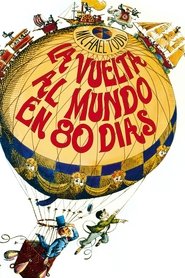
Producer Michael Todd spent months persuading him to make the leap to American studios. In 1956 filming began on Around the World in Eighty Days, a blockbuster shot in the Todd-AO format at 70 millimeters, in which he shared the screen with David Niven and a parade of forty-four cameos by international stars. Moreno insisted that his name appear ahead of the British cast in advertising in Spanish-speaking countries, and his performance as Passepartout earned him the Golden Globe for Best Actor – Motion Picture Musical or Comedy in 1957.
The experiment worked at the box office, but the American adventure did not last long. George Sidney tried to repeat the trick in 1960 by directing Pepe, a three-hour, fifteen-minute film produced by Columbia with an extravagant budget of more than four million dollars. The script forced the comedian to interact in English with Maurice Chevalier, Frank Sinatra, and Judy Garland, completely killing the charm of his idiomatic wordplay and his natural improvisational rhythm.
Hollywood did not buy the formula.
The film flopped badly in American theaters, burying any attempt to break into the Anglo-American market. Moreno collected his paycheck, canceled the English-language contracts he had lined up in California, and returned to the Churubusco Studios, never again to make a film in any language other than Spanish.
Sunday sermons and the latest legal feud
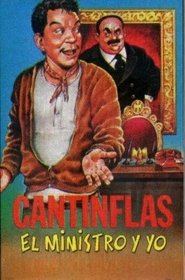
From the 1960s onward, films abandoned the street-level roguish humor and turned into moral vehicles in which the lead character lectured audiences on civic virtue. Titles such as The Illiterate in 1961, The Little Father in 1964, and The Minister and I in 1976 traded anarchic humor for melodramatic speeches against official corruption and employer injustice.
In 1981 he shot his last film, El barrendero, directed by Miguel M. Delgado, the filmmaker behind more than thirty of his movies. The production brought in impressive numbers at neighborhood theaters, but specialized critics tore apart a worn-out script that recycled mechanical jokes filmed in wide shots with little spark. Moreno was seventy years old and decided to turn off the lights for good.
Mario Moreno died of lung cancer on April 20, 1993, in Mexico City. His death sparked a court battle in Mexico between his adopted son, Mario Moreno Ivanova, and his nephew, Eduardo Moreno Laparade, over the rights to thirty-nine feature films in his film catalog. The dispute over Columbia Pictures royalties dragged on for more than twenty years in appeals courts, and the heirs never managed to agree on a single contract.