Betting on Hong Kong cinema
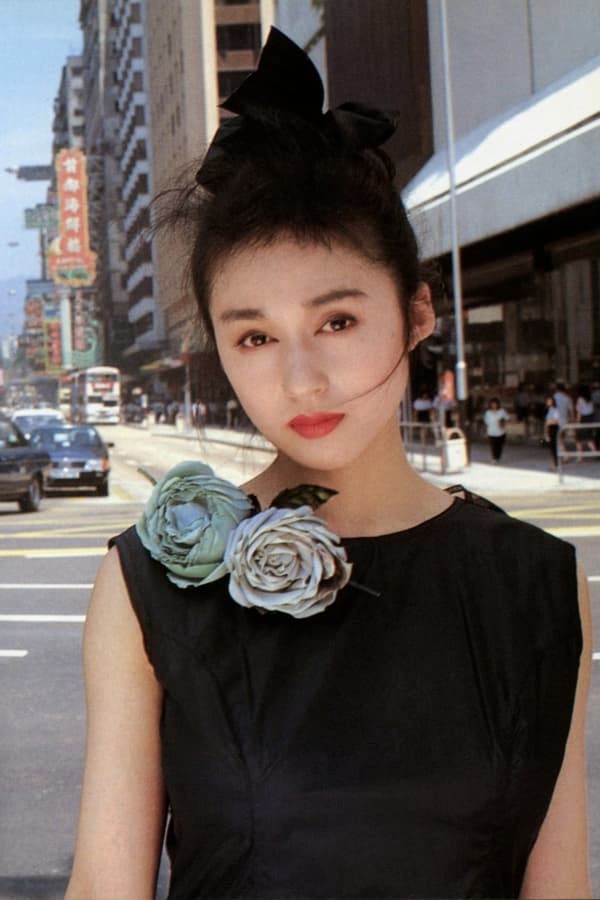
Chikako Aoyama was born in Osaka in 1970, and her entry into film broke the mold of the traditional Japanese industry. In the early nineties she decided Japan was too small for her. So she packed her bags and settled in Hong Kong without speaking more than a word of Cantonese.
And the gamble paid off.
In 1992 she landed the lead role in The Wicked City, a live-action adaptation of the famous anime directed by Peter Mak. That film placed her at the center of Asian genre cinema thanks to her cool presence on camera and a physicality that suited the dark aesthetic of the era. She worked alongside Leon Lai and Jacky Cheung on a shoot marked by practical effects and endless days.
But Aoyama didn't want to be just a face on an action poster. Understanding that her career needed depth, she began choosing projects that moved away from the most obvious mainstream circuit.
Total control of the image
During 1993 she shot The Room, a film that blended suspense with a very specific erotic charge. At the time, critics didn't know how to categorize it. She also appeared in the production The Goodbye Merry-Go-Round that same year under the supervision of Roland Joffé.
Aoyama began experimenting with professional photography and published several art books. In these volumes she controlled the lighting and composition of every frame herself to avoid the objectifying gaze of other photographers.
She wasn't looking to become a conventional star.
In 1994 she took part in Rampo, a visually lavish work based on the world of writer Edogawa Rampo. Her style shifted toward something more restrained and mysterious. That role gave her the chance to work with director Kazuyoshi Okuyama on a project with an unusual budget for Japanese independent cinema of those years.
Occasional comebacks and industry management
By the late nineties her release pace slowed by her own choice. She decided to focus on her training as a color therapist and on talent management. Before stepping away from leading credits, she took part in The Mistress in 1999, a closing chapter before moving to London to study design.
She returned to Japanese screens in 2005 with the film Strange Circus directed by Sion Sono. It was a brief collaboration on one of the filmmaker's most disturbing works. The film was shot in under three weeks with a small crew to maintain the tense atmosphere on set.
Aoyama never chased a large number of titles in her filmography. In 2011 she appeared in the series Diplomat Kosaku Kuroda, and in 2016 she joined the cast of Museum, a thriller by Keishi Otomo. Her professional life later shifted toward actor representation and aesthetic consulting between Japan and the rest of Asia.
In 2021, she contributed to the second season of The Naked Director for Netflix. Filming of her scenes wrapped at Toho Studios under strict safety protocols. The production used anamorphic lenses to recreate the visual texture of the 1980s.