Douglas Fowley and the Art of Secondary Neurosis
Douglas Fowley spent half his life shouting instructions behind a fake microphone.
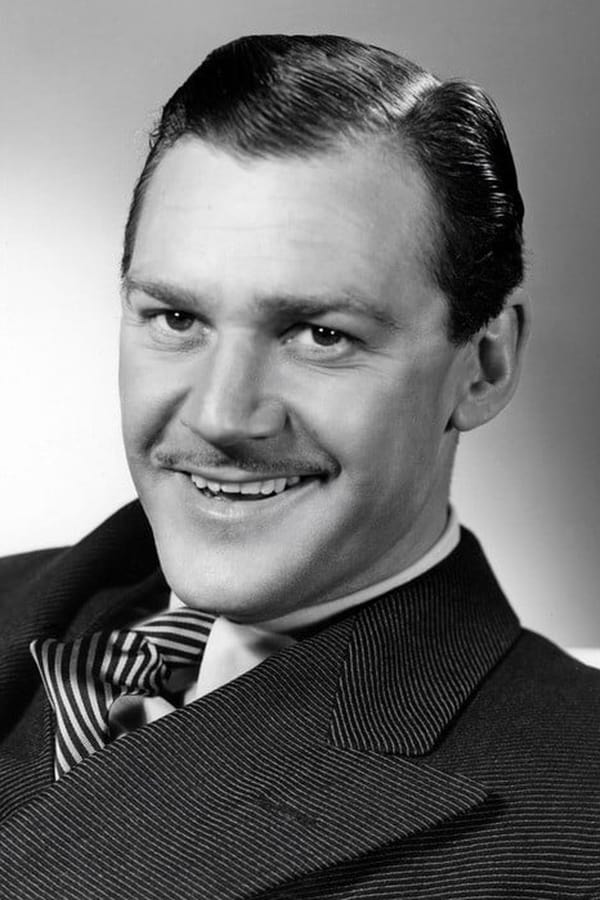
Born in the Bronx in 1911, this New York actor quickly realized that in Hollywood, looks could make or break a career. He had a sharp jaw and a gaze that swung between neurosis and mischief. Before stepping onto a set, he honed his craft in vaudeville and nightclubs, where he learned to master the rhythm of physical comedy.
He made his film debut with an uncredited role in The Mad Game in 1933. From there, he racked up dozens of supporting roles, often playing small-time gangsters or guys you didn't want to play poker with. But his big break didn't come from being the leading man.
And the gamble paid off.
The Man Who Tamed Lina Lamont
In 1952, Metro-Goldwyn-Mayer cast him as Roscoe Dexter in Singin’ in the Rain. In the film, Fowley plays the frantic movie director who tries to teach a silent film star how to talk. His performance is a masterclass in nervous comedy that steals the spotlight from the leads in every scene with the hidden microphone.
He shot that iconic scene over and over until exhaustion because the chemistry between the actors had to be perfect. His ability to convey the frustration of the transition from silent films to sound came from his own experience in the industry. He had lived that transition from the inside and knew that the sound of pearls against the microphone was no joke.
Despite the impact of the film, he never rose to the top tier of stars with his name above the title. He stayed in the industry's middle class, tirelessly working in B-movies and television. In 1955, he accepted the role of Doc Holliday in the series The Life and Legend of Wyatt Earp and stayed with it for six years.
Television gave him the stability that film denied him.
Cameras, Action, and Low Budgets
Fowley wasn't content just to stand in front of the camera. During the 60s, he decided to try his luck at directing and producing low-budget films. His style was direct and no-frills, because he knew the system's mechanisms for cutting costs on every working day.
He directed Macumba Love in 1960 and produced several horror and suspense titles that now circulate among cult audiences. His personal life, however, had complicated chapters. His son, Kim Fowley, would later become a controversial music producer responsible for the group The Runaways.
The relationship between the two was tense and distant for decades.
In his later years, he retired to California to live away from the spotlight of the major studios. Douglas Fowley died on May 21, 1998 in Woodland Hills at the age of 86. He was buried at Laurel Canyon Cemetery after a career that included more than 240 acting credits and 7 work as a second unit director.