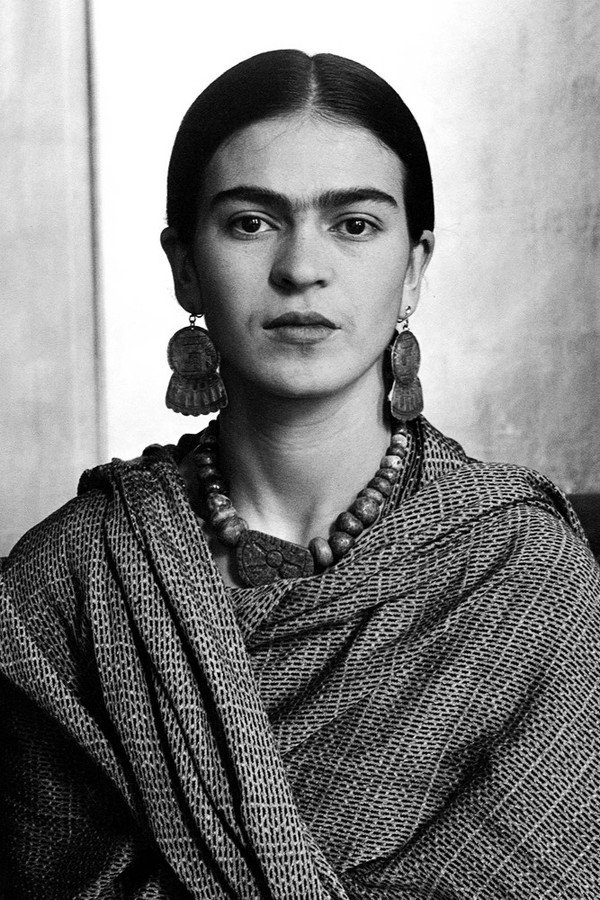
On September 17, 1925, an iron handrail pierced the pelvis of Frida Kahlo when the wooden bus she was riding in collided with a streetcar in Mexico City. She was eighteen and planned to study medicine. That blow fractured her spine in three places, broke her collarbone, two ribs and her right leg in eleven pieces.
No one expected her to survive the first week.
She spent months immobile in a canopy bed where her mother had installed a mirror on the ceiling. That simple optical device solved her first composition. She began painting with an adapted easel because it was the only thing she could do without sitting up. Her first serious work, Self-Portrait in a Velvet Dress, responded as much to the urgency of holding on to a boyfriend who was drifting away as to the sheer boredom of convalescence.
She soon realized that her broken body was her best working material. Plaster corsets and orthopedic traction stopped being medical dressings and became direct supports for her painting.
The Collision of Two Trains in Coyoacán
In 1928, she met Diego Rivera on the scaffolding of the Ministry of Public Education. Rivera painted monumental murals for the masses of post-revolutionary Mexico, while she worked on small tin plates and tiny canvases for private consumption. They married in 1929 in Coyoacán. Kahlo's mother described the union as a match between an elephant and a dove, a zoological image that fits surprisingly well two figures who kept up a destructive tug-of-war for a quarter of a century.
During her stay in Detroit in 1932, she suffered a miscarriage at Henry Ford Hospital, which blew apart the conventions of female modesty in painting. She painted Henry Ford Hospital on a metal sheet barely thirty centimeters wide. The work floats six elements connected to her abdomen by red filaments, including a bloodied fetus, a snail and an anatomical model of a pelvis. That painting founded a visceral language unlike anything else in Western art.
Breton and the Surrealist Trap
In 1938, André Breton arrived in Mexico looking for the surrealist country par excellence and believed he had found in Kahlo a disciple for his doctrine. He organized an exhibition for her in Paris the following year. But the European landing was a logistical disaster. The works were held up at French customs, Breton had not reserved the promised gallery, and the painter ended up hospitalized with a bacterial infection.
Breton didn't understand a thing.
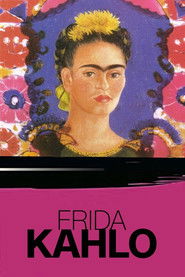
Kahlo despised the posturing of the intellectual circles of Montparnasse, whom she called useless charlatans in her letters. She rejected the Surrealist label from the very first moment. She insisted that she never painted dreams, only her own surgical reality. Despite the chaos of her stay, the Louvre Museum acquired her self-portrait The Frame in 1939. It was the first work by a 20th-century Mexican artist to be bought by the French museum.
The Bed as Final Stage
In the 1940 decade, her body entered a phase of continuous collapse. She endured dozens of spinal surgeries, failed bone grafts and the permanent use of metal corsets that kept her from sitting up. And yet her output never stopped. Between 1944 and 1946 she completed The Broken Column and The Wounded Deer, two works where Mexican folk imagery collides with the medical record of chronic pain.
In April 1953, photographer Lola Álvarez Bravo organized her first solo exhibition in Mexico, at the Contemporary Art Gallery. Doctors forbade her to get up under threat of imminent death. So Kahlo had her canopy bed moved in a moving truck and placed it in the center of the gallery. She arrived by ambulance, dressed in her Tehuana costume, and received critics lying down among the sheets while drinking tequila.
Months later, surgeons amputated her right leg below the knee due to gangrene. She died on July 13, 1954 at the Casa Azul at the age of forty-seven from a pulmonary embolism.
In November 2021, Sotheby’s auction house in New York sold her self-portrait Diego and Me for 34.9 million dollars to private collector Eduardo Costantini. The figure more than quintupled any previous record for Latin American art and closed the commercial catalog with a strict tally of just one hundred and forty-three oil paintings completed during her lifetime.