The Sheikh with the Impossible Eyebrows
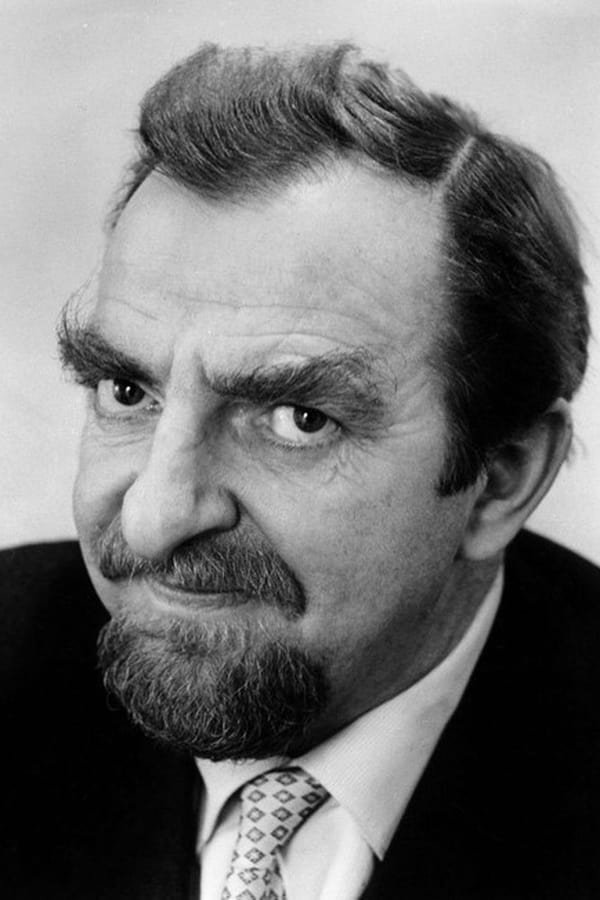
Hugh Griffith did not have a leading man's face, but he had a stare that frightened casting directors. His eyebrows were two unruly thickets that seemed to have a life of their own in front of the camera. He won the Oscar for Best Supporting Actor in 1960 for playing Sheikh Ilderim in Ben-Hur.
And he did it in blackface.
Before becoming an actor, he worked at a bank. He was born on an island off Wales called Anglesey in 1912, and his future seemed to lie in balance sheets and cash deposits. But the theater crossed his path, and he chose to leave stability behind for the uncertainty of the London stage.
In 1939 he entered the Royal Academy of Dramatic Art. World War II put his plans on hold because he had to serve in the British Army in India and Burma. That military experience hardened a character that was already volcanic and prone to excess.
The Dismissal in the South Seas
William Wyler was looking for someone who could steal scenes from Charlton Heston without saying a word too many. Griffith accepted the role of the sheikh in Ben-Hur and cashed a check that changed his financial standing forever. His performance earned him the statuette despite later criticism of the racial makeup of the era.
But his temperament was difficult.
Filming Mutiny on the Bounty in 1962 went seriously wrong. Marlon Brando was already a problem because of his demands, but Griffith added alcohol to the production's already volatile mix. Metro-Goldwyn-Mayer decided to fire him before he finished his scenes because of his erratic behavior on set.
He lost thousands of dollars in future contracts because of his reputation as an uncontrollable drinker. So he had to lower his sights and accept supporting roles in less ambitious productions to pay the bills. The stigma of being a troublesome actor haunted him for the rest of the 1960s.
And the phone stopped ringing as often.
The Redemption of a Luxury Supporting Actor
In 1963 he shone again in Tom Jones under the direction of Tony Richardson. His role as Squire Western earned him another Oscar nomination and proved that his talent was still there when he was sober. He was a true character actor who needed outsized characters to feel at home.
He appeared in How to Steal a Million in 1966 alongside Audrey Hepburn. His role as an art forger was a delight of refined comedy that contrasted with his tougher parts. Griffith could be elegant when the script demanded it, and the director knew how to handle his timing.
He died at his London home in May 1980 from a heart attack. He was 67 years old and had just finished his role in the series A Tale of Two Cities. He left behind more than a hundred film and TV credits and a reputation as an untamable man who never wanted to fit into the Hollywood mold.