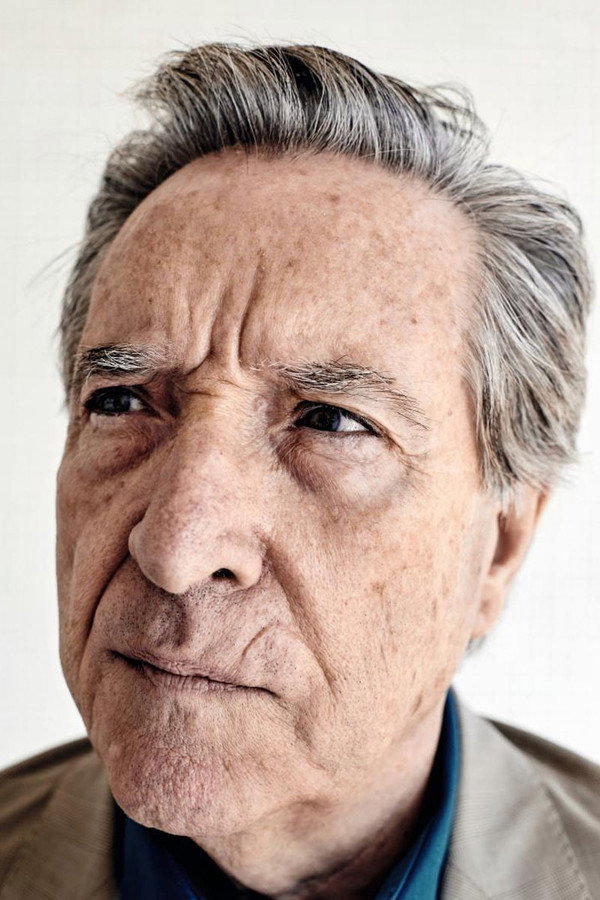
At eleven at night on February 23, 1981, Iñaki Gabilondo had no written script and no working teleprompter in the Prado del Rey studios. As TVE's news director, he had only been in the job for a few weeks when tanks rolled into the streets of Valencia. He sat down in front of the red light, wearing a sober suit, and held his composure through nearly ten hours of tense live broadcasting.
Nobody knew what would happen.
That fixed television shot set a standard of sobriety for millions of frightened viewers. He made no fuss. He read the official statements that reached the newsroom, waited for the king's message to air, and kept his technical calm in a control room threatened by armed soldiers.
But Gabilondo's narrative pulse had already been tempered long before, far from the Madrid cameras. Born in San Sebastián in 1942, he learned his craft at the controls of Radio Popular at age twenty-one. In 1969, he took over the directorship of Radio San Sebastián, and two years later moved to Seville. In those southern studios, he learned to edit reports with scissors and adhesive tape over reel-to-reel tape spools.
The weight of three million listeners
In 1986, Cadena SER gave him the morning slot to create Hoy por hoy. Competition from Luis del Olmo was tight on the radios of half of Spain, but Gabilondo designed a structure that ran with the precision of a metronome. He interspersed the rigor of political interrogation early in the morning with ensemble segments devoted to literature, theater, and the latest in cinema.
For nineteen years in a row, he led the morning slot on the general-interest radio station. In 1995, the program logged thirty consecutive EGM waves in first place in the ratings. He knew how to measure pauses and banished cheap tension music to let the silence speak.
And the formula never needed fireworks.
In 1990, he tried his hand at television directing again with Iñaki, los jueves for the regional channels of FORTA. It was a late-night format of long interviews and live debates, where he found that his conversational tone gained weight when the camera closed in on his guest's eyes.
The leap into the void of private television
In late August 2005, he decided to end two decades of morning routine at the Gran Vía studio. Sogecable was preparing the free-to-air launch of Cuatro and needed a face with proven authority to compete in prime time. He left radio on a Friday and on November 7 took the helm of Noticias Cuatro.
The premiere drew a 15.1% audience share, a record figure for a station that had just been born. But the daily news battle demanded a breakneck editing pace that clashed with his reflective temperament. Gabilondo championed a clean on-air presentation, supported by Silvia Intxaurrondo, prioritizing well-crafted reports over the avalanche of brief incident coverage.
In 2010, Mediaset's absorption of Cuatro forced his exit from general television and his move to the 24-hour news channel CNN+, with the late-night program Hoy. The show did not last long. On December 28 of that same year, the channel ceased broadcasting permanently due to a lack of financial viability.
That night the signal went black without grand farewells.
Documenting the future before the silence
Freed from the demands of daily news, he turned to large-format documentaries made with film-grade production. In 2016, he premiered the production Cuando ya no esté: El mundo dentro de 25 años on the pay platform Movistar Plus. Accompanied by the La Caña Brothers team, he traveled to laboratories in Boston, Munich, and Tokyo to question scientists about algorithms, robotics, and cloning.
In 2020 he explored the hybrid format with the docufiction Porvenir, a three-part miniseries focused on the climate crisis that combined interviews with fictional scenes shot with film lenses. He had always understood that audiovisual education required the same visual polish as a fictional feature film.
In September 2021, he announced live on air that he was leaving his political opinion column so as not to repeat himself for his listeners. He closed the red microphone calmly and reduced his public appearances to isolated engagements at cultural series and communication conferences.
In November 2024, he received the Senior of the Year award in Madrid after accumulating twenty thousand hours of live broadcasting recorded on analog tapes and broadcast hard drives. The tally marked more than six decades of uninterrupted paychecks in Spain's newsrooms.