The son of the painter who broke the canvas
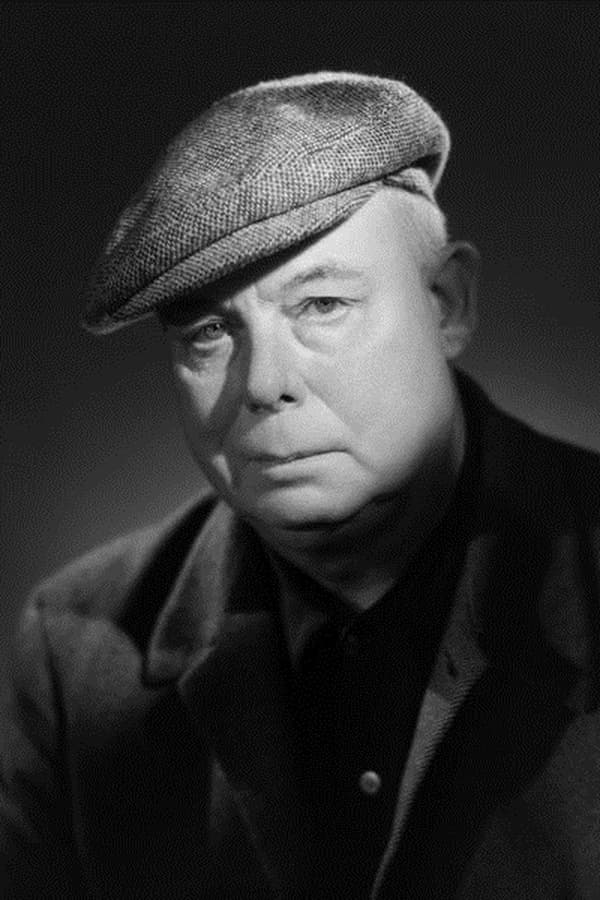
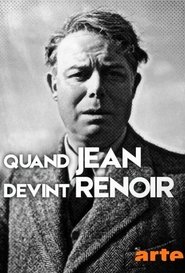
Jean Renoir did not want to be a film director. At first, he preferred ceramics and the fire of the kilns. But his father Auguste's shadow was too long, and young Jean ended up squandering his inheritance producing films for his wife, Catherine Hessling.
And he jumped without a safety net.
His early works were costly experiments financed by selling the family's Impressionist paintings. In 1926, he shot Nana, a big-budget production that nearly ruined him completely. It was his first serious clash with the reality of an industry that did not yet understand his approach to staging a scene.
Before directing his major works, he spent years learning that cinema was a matter of money and patience. For Renoir, the camera was not a silent witness but another guest at the actors' table. So he began moving it in a way no one in France had seen before.
The prodigious decade and the rejection from Paris
In the 1930s, Renoir invented poetic realism almost without realizing it. Films like La Grande Illusion (1937) showed that you could talk about war and brotherhood without sliding into propaganda. Joseph Goebbels banned it in Germany for being the number one enemy of nationalist sentiment.
But the real earthquake came with The Rules of the Game in 1939. The Paris audience booed the premiere, and critics tore it apart with unusual savagery. It was such a complete box office failure that the director had to cut the original footage in an attempt to salvage its distribution in the provinces.
Nobody saw coming that this film would become the foundation of all modern cinema.
The film portrayed a decadent bourgeoisie dancing on the edge of a volcano about to erupt. Shortly after that premiere, the Nazis invaded France, and the filmmaker had to pack his bags. The world he had depicted with such precision was truly falling to pieces.
American Exile and the Return to Color
With the Nazi occupation, Renoir fled to the United States in 1941. Hollywood welcomed him as a prestigious master but treated him like a beginner behind the studio doors. The studios couldn't stand his habit of improvising on the fly or his contempt for the rigid script. Even so, he left behind odd works such as The Southerner in 1945.
Renoir never fit into the California studio system.
Because for him, technique was always secondary to the humanity of his characters. So he decided to seek fresh air and shoot The River in India in 1951. It was his first color film, and it changed the way he understood light and nature for the rest of his life.
In his later years, he devoted himself more to writing novels and teaching in California than to stepping behind the camera. His health declined in the mid-1970s, and he settled permanently in his Beverly Hills home. He died on February 12, 1979 surrounded by his memories and some of the paintings he never had to sell to finance his shoots.
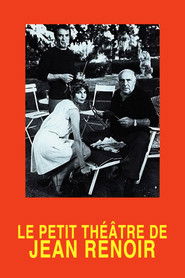
His last film was The Little Theatre of Jean Renoir, produced for television in 1970.