The Gaze That Defied the Studio System
Jean Simmons was fourteen years old when a talent scout spotted her at a dance class in London. She wasn't looking for a star, but he found a face that looked like it had stepped off a Pre-Raphaelite canvas. In 1944, she made her debut in Give Us the Moon, and just two years later she was working under David Lean in Great Expectations. Her portrayal of the young Estella put her on the radar of the postwar British film industry.
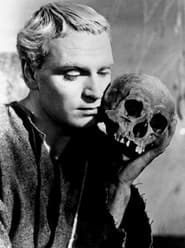
Her training was purely practical, forged on cardboard-and-plaster sets. In 1948 Laurence Olivier chose her to play Ophelia in Hamlet. That role earned her an Oscar nomination and a Volpi Cup in Venice at just nineteen years old. But European prestige was not enough for the ambitions of the great moguls on the other side of the pond.
Simmons crossed the Atlantic with a mix of innocence and determination.
The Lawsuit Against the Invisible Millionaire
When she arrived in the United States, she ran into an obstacle named Howard Hughes. The eccentric owner of RKO bought her contract from J. Arthur Rank without consulting her and intended to treat her as one of his many conquests or puppets. Hughes wanted to shape her image and control her finances. But Simmons was not a docile debutante, and she refused to sign abusive contract extensions.
The studio's response was professional punishment. They assigned her mediocre scripts and projects with no budget to wear down her patience. In 1952, the actress took Hughes to court in a move many considered professional suicide in Hollywood at the time. She won the lawsuit and regained her contractual freedom, though she paid a high price in legal costs and lost time.
She only wanted to work on her own terms.
Maturity Among Prophets and Gladiators
In 1953, she starred in The Robe and proved that her presence filled the CinemaScope screen effortlessly. But her big breakthrough came in 1960 with two titles that defined her status. In Spartacus, she played Varinia under the direction of Stanley Kubrick. It was a complex shoot in which she brought the humanity needed to give the sword-and-sandal spectacle of blood and battle a solid emotional core.
That same year, she shot The Fire and the Word under Richard Brooks, who soon after became her second husband. Her role as Sister Sharon Falconer is probably the most complex of her filmography. She managed to overshadow a volcanic Burt Lancaster through a restrained performance that film schools still study today. The movie was a critical and commercial hit that definitively freed her from the 'pretty face' label.
By the late sixties, movies were changing and roles for women of her generation were scarce. Simmons refused to cling to nostalgia and turned to the stage and television instead. In 1983, she appeared in the miniseries The Thorn Birds, and her performance as Fiona Cleary earned her an Emmy Award. It was one of the most-watched productions of the decade in the United States and brought her back into the spotlight with the general public.
She died on January 22, 2010 at her home in Santa Monica from lung cancer. She was 80 years old and spent her final days surrounded by her dogs and her two daughters. The funeral was private, and the studios organized no major public tributes.