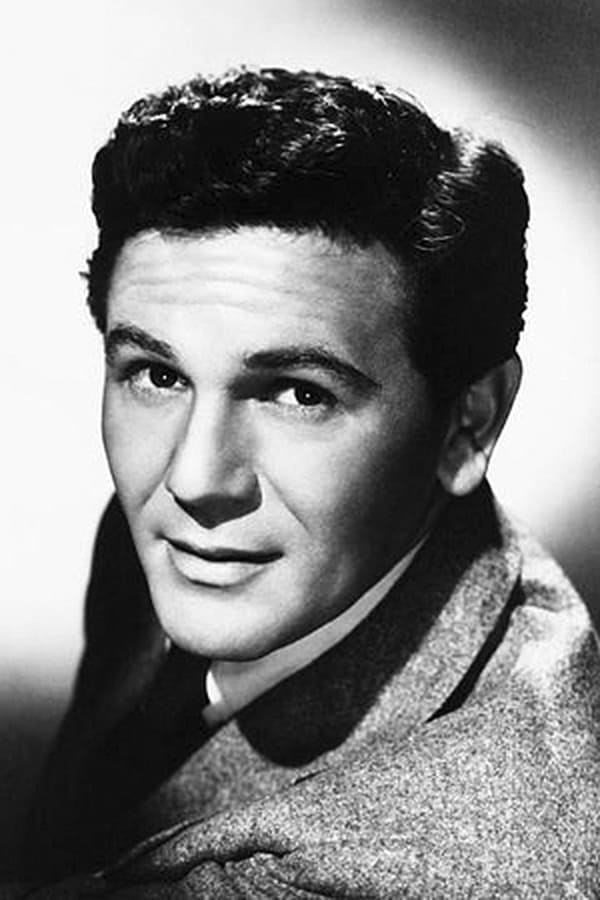
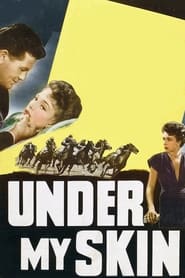
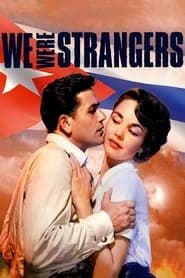
The Lower East Side kid who didn't know how to smile
John Garfield didn't have the marble jaw of the era's leading men or the affected elegance of the tearooms. He was born Jacob Julius Garfinkle in a humble neighborhood in New York City, and the grit of those streets stuck to his skin for his entire career. In 1932 he joined the Group Theatre, where he learned that acting was a matter of guts.
Clifford Odets wrote Golden Boy with him in mind, but producers preferred another actor for the Broadway premiere. That snub hurt him deeply. So when Warner Bros. came knocking in 1937, he signed the contract with an unheard-of condition for a newcomer: he demanded the right to turn down roles he considered mediocre.
And the gamble paid off.
In 1938 he made his film debut in Four Daughters and achieved what almost no one managed with a first film. The Academy nominated him for an Oscar for Best Supporting Actor for playing a cynical, rebellious musician. Audiences connected with his weary gaze because Garfield didn't act like a working man; he was a working man who acted.
But success within the studio system quickly suffocated him.
He hated chewed-up scripts and plots where the hero always ended up with a spotless suit. In 1946 he starred in The Postman Always Rings Twice opposite Lana Turner. That film noir oozed a sexual tension the censors could barely contain. His performance as Frank Chambers defined the modern antihero long before Marlon Brando or James Dean ever set foot on a set.
Independence and Sweat in the Ring
Garfield was one of the first actors to understand that real power lay in production. In 1946 he founded his own company, Enterprise Productions, to have full control over his stories. He wanted to make films about corruption and class struggle, free of the filters imposed by Hollywood's big moguls.
In 1947 he made Body and Soul under his own banner.
He poured much of his physical energy into the boxing scenes of that film because he wanted the sweat and exhaustion to feel real. The result was his second Oscar nomination and nearly five million dollars at the U.S. box office. It proved that an actor could survive outside the walls of the majors if he had enough talent.
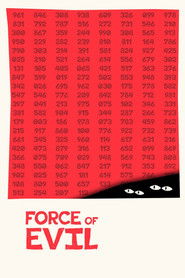
A year later he shot Force of Evil in 1948. This film noir masterpiece explored the underworld of illegal betting with an almost documentary aesthetic. The film was uncomfortable for the political system of the day because it exposed the cracks in the American Dream. That put him squarely in the sights of the country's most conservative circles.
He was a dangerous man to the system.
The Price of Naming No One
Senator McCarthy's witch hunt reached his door at the worst possible moment. In 1951 he was called to testify before the House Un-American Activities Committee over his alleged ties to communism. Garfield refused to name colleagues or friends during the questioning. He was no ideologue, but he had an ethical code that kept him from becoming an informer.
Hollywood shut its doors on him immediately, and his name landed on the blacklist. Job offers dried up, and the stress began to devour his health. He had a heart condition since childhood that was worsened by the constant pressure from the FBI and the impossibility of practicing his craft.
His last film was He Ran All the Way, shot in 1951.
On May 21, 1952, he died of a heart attack in an apartment in New York at just 39 years old. His funeral was a massive event, with more than 10,000 people crowding the streets of Manhattan to bid farewell to the actor who had never let them down. The autopsy confirmed that his heart was the size of a much older man's, due to the physical and emotional strain of his final months. His bank account at the time of his death reflected an estate of just over 100,000 dollars.