London and the Mud of Tokyo
Kaori Momoi never sought the approval of the system. At age twelve, she traveled to London to study ballet at the Royal Academy of Dance, but the technical rigor eventually wore her down. She returned to Tokyo with iron discipline and a broken voice that directors didn't know how to place.
Ballet lost a dancer, and film gained a problem.
In 1971, she made her big-screen debut in Ai Futatabi under the direction of Kon Ichikawa. That first foray marked the start of a frantic period in which she appeared in more than sixty films over barely two decades. Her style moved away from the fragility the Japanese industry demanded of actresses of the era.
In 1977, she starred in The Yellow Handkerchief, and her performance earned her widespread recognition. But Momoi never felt comfortable in the mold of the docile star. Her way of speaking (a mix of tobacco and weariness with life) broke the mold of Japanese television and film.
The Woman Who Never Asked for Permission
During the 1980s, she worked with filmmakers of the caliber of Akira Kurosawa on Kagemusha. That experience in 1980 cemented her status as an actress capable of carrying big-budget productions without losing her identity. Momoi always chose her scripts based on the complexity of the character rather than the paycheck.
In 2005, she made the leap to Hollywood with Memoirs of a Geisha. She played Mother with a dryness that stole every scene she appeared in. That same year, she appeared in Alexander Sokurov's The Sun, proving her talent worked just as well in European auteur cinema.
Directing was the next logical step.
In 2006, she wrote and directed her debut feature, Faces of a Fig Tree. International critics were surprised by a visual narrative unlike anything she had done as an actress. With this work, she became the first Japanese woman to win four Academy Awards in her country, across a range of technical and artistic categories.
From acting to total control
Momoi moved to Los Angeles to manage her international career with greater freedom. In 2016, she premiered Hee at the Berlin Film Festival, where, in addition to directing, she played a woman obsessed with fire. The film was shot with a minimal crew and an almost documentary aesthetic.
In 2017, she joined the cast of Ghost in the Shell alongside Scarlett Johansson. Despite the scale of the project, she kept her policy of not doing empty promotional interviews. She prefers to let her work speak for her at top-tier festivals.
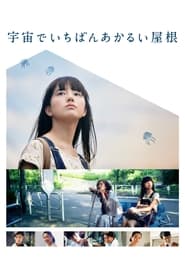
In 2020, she appeared in The Brightest Roof in the Universe under the direction of Michihito Fujii. In this production, she played an older woman who lives on a rooftop and provides the emotional counterpoint to the young lead. It's a role that showcases her ability to move between commercial drama and more daring projects.
Her working method hasn't changed over the decades. She reads the script just once and trusts her instincts during the first rehearsal. For her, repetition is the death of truth on screen.
The production of The Last Five Years in 2023 wrapped its shoot on a budget suited to the demands of Japanese independent film.