Drawing Before Acting
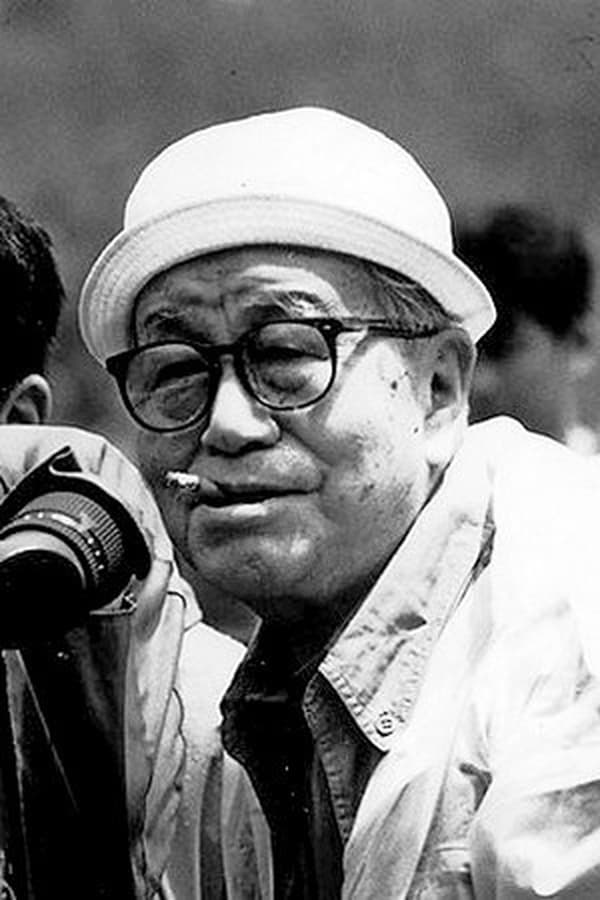
Kon Ichikawa broke into film through the animation door. In 1933, when his true ambition was to emulate Walt Disney, he began working in the animation department at J.O. Studios in Kyoto. That technical training shaped his view of framing as a canvas where every millimeter of light was calculated.
During World War II, he had to adapt to the demands of propaganda, but his mind stayed focused on pure aesthetics. That visual obsession helped him survive the censorship of the American occupation after Japan's defeat. In 1948, he directed his first feature-length fiction film and began experimenting with genres ranging from satirical comedy to the darkest drama.
Many directors look for a unique style. Ichikawa preferred constant metamorphosis.
Most of his great works were born from his collaboration with his wife, screenwriter Natto Wada. Between 1954 and 1965, she wrote nearly all of his scripts and acted as a human counterweight to the director's sometimes cynical gaze. But the professional partnership ended when she decided to retire from writing. Years later, Ichikawa admitted that without her he had lost a fundamental compass for understanding how his characters behaved.
The Camera Against the Mud
In 1956, he released The Burmese Harp, and the world discovered that Japanese cinema was not just about samurai. The film tells the story of a soldier who decides to stay in Burma to bury the war dead instead of returning home. It was an international hit that allowed him to take on far more daring and violent projects.
But his true technical peak came in 1959 with Fires on the Plain. It is one of the most brutal films about military defeat, showing cannibalism and physical degradation without sentimental filters. The director used black and white to emphasize the despair of soldiers abandoned to their fate on Leyte Island. The raw images caused fainting spells at some press screenings of the time.
Ichikawa was not afraid of moral emptiness.
In 1965, he was commissioned to document the Tokyo Olympics. The Japanese government expected a propaganda film celebrating the country's reconstruction, but he delivered Tokyo Olympiad. Instead of focusing on the winners, he turned the lens on physical effort, the sweat of the losers and the anatomical details of the athletes. That documentary changed the way sports were filmed forever.
The Craftsman of His Nineties
From the 1970s on, his career took a commercial turn that puzzled the more intellectual critics. He specialized in adapting mystery novels by Seishi Yokomizo and made The Inugami Family in 1976 a mass phenomenon in Japan. He used fast editing and a pop aesthetic that connected with a young audience who barely knew his war dramas.
He never stopped working.
Even when the Japanese industry began turning its back on him because of his age, Ichikawa found funding for small, personal projects. In 2000, he shot Dora-heita with his old friends Kon Ichikawa, Akira Kurosawa and Keisuke Kinoshita. The script had been written thirty years earlier, but they didn't secure the money until the end of their lives.
His last film was a remake of his own hit The Inugami Family in 2006. He was 91 years old and directed from a wheelchair without losing an ounce of authority over the crew. He died on February 13, 2008 at a hospital in Tokyo from pneumonia. He left behind a filmography of more than 80 titles and a bank account devoted almost entirely to funding his own aesthetic visions.