The Man Who Arrived Before Bruce Lee
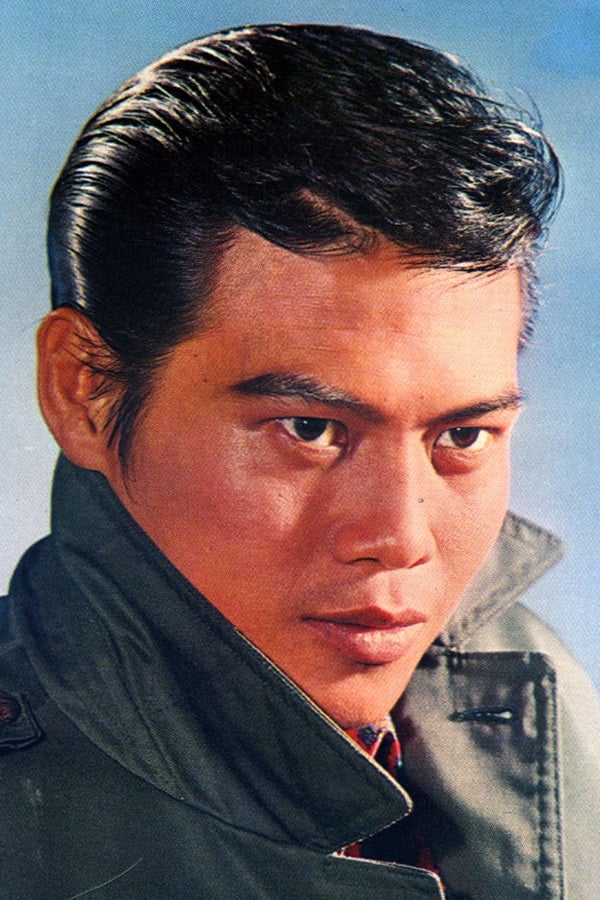
In May 1973, the U.S. box office bowed to an actor whose last name wasn't Lee. King Boxer, released there as Five Fingers of Death, put Lo Lieh's face on movie posters across half the world months before the phenomenon of Enter the Dragon took off for good. That 1972 film was not only a financial hit for the Shaw Brothers, but took the number one spot at the U.S. box office during its opening weekend.
It was the first major international breakthrough of Hong Kong martial arts cinema.
Born in Indonesia in 1939 under the name Wang Lap-tat, his arrival in Hong Kong marked a change of style for the local industry. He lacked the classic good looks of the wuxia leading men of the 1960s and the elegance of Jimmy Wang Yu. But his gaze projected a physical intensity that directors knew how to exploit from the moment he joined the Shaw Brothers acting school in 1962.
That toughness was his greatest asset.
During his first years at the studio, he took part in dozens of productions where the sword still dominated the screen. In 1969, he starred in The Golden Swallow under the direction of Chang Cheh, where he began to refine that image of a solitary, stern warrior. But the real change came when sword films gave way to bare-handed combat, a field where his training in karate and kung fu allowed him to stand out over purely dramatic actors.
The Necessary Villain and the Unexpected Director
Despite his success as a hero in King Boxer, the Hong Kong film industry tended to typecast him in villain roles because of his stern expression. Lo Lieh took on the challenge with astonishing productivity and went on to make more than two hundred films over the course of his career. He often worked on three simultaneous shoots, sleeping during breaks between fight scenes choreographed by Lau Kar-leung.
But his ambition didn't stop in front of the camera.
In 1980 he directed and starred in Clan of the White Lotus, a film that is studied today for its use of color and the Duck Style technique. The film helped establish him as an auteur who understood editing rhythm in action scenes. So while other actors of his generation faded with the rise of the 1980s action comedy, he stayed busy working for the production company Golden Harvest.
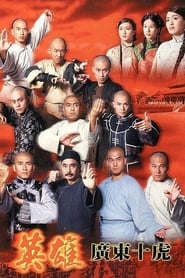
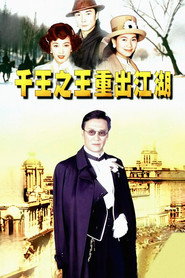
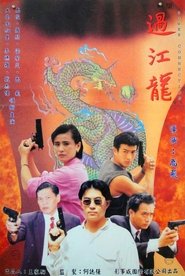
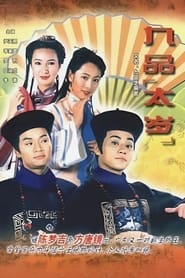
The 1990s were different. Hong Kong cinema went through an identity crisis, and Lo Lieh chose to retreat to television, working for the TVB and ATV networks. In 1988 he played one of his most memorable roles of that period in Police Story 2 alongside Jackie Chan, proving that his mere physical presence still commanded respect without the need for impossible stunts.
He adapted to the system without complaint.
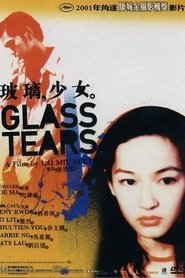
By the late nineties, his appearances became more sporadic and focused on low-budget productions or cameos that appealed to the nostalgia of veteran moviegoers. In 2001, he appeared in Glass Tears, one of his last appearances before stepping away from the spotlight for good. He died in Shenzhen of a heart attack in November 2002, at the age of 63. His death coincided with the final decline of the golden age of the studios that had launched him as a star.