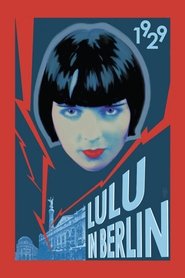
The Black Bob That Defied Hollywood
Louise Brooks never asked permission to exist. In 1925, she arrived in New York with a jagged, razor-cut bob and a gaze that unsettled Paramount's producers. That black bob was not merely an aesthetic choice. It represented an independence that the silent film industry, accustomed to malleable divas, did not know how to handle.
But Brooks didn't want to be just another pretty face on the marquee. In 1928, Howard Hawks directed her in A Girl in Every Port, and it was there that G.W. Pabst saw something the California system had overlooked. The German director was looking for his Lulu for Pandora's Box, and she, fed up with her studio's contract terms, decided to leave for Europe.
The bet paid off.
In Berlin, she made two landmark films that changed how eroticism was portrayed on screen. Pandora's Box and Diary of a Lost Girl, both directed by 1929, featured a woman who did not apologize for her desires. Her performance relied on naturalness and avoided the exaggerated gestures that dominated cinema of the era.
Voluntary Exile and the Studio's Punishment
When she returned to the United States, she hit a wall. Paramount demanded that she dub her own dialogue for the sound version of The Canary Murder Case, but she flatly refused. It was an act of defiance that cost her career. The studios spread the rumor that her voice was unfit for talkies, and they put her on a de facto blacklist.
Hollywood never forgave her.
During the 1930 decade, her presence in film gradually faded until she was stuck in low-budget B-movie supporting roles. In 1938, she shot her last film, a Western titled Overland Stage Raiders, alongside a young John Wayne. After that shoot, she decided she would never set foot on a movie set again and returned to Wichita to teach dance, though she ended up working as a salesgirl at a large department store in New York.
And so she spent years in complete anonymity. Brooks preferred poverty to submitting to the rules of a business she deeply despised. Her name faded into oblivion until French critics at the Cinémathèque Française rediscovered her work in the 1950s.
Writing as a Final Refuge
In 1956, she moved to Rochester at the invitation of the conservative critic James Card. There she entered a period of introspection and writing that revealed her as one of the most lucid film essayists of the twentieth century. Her articles showed no mercy toward the industry. She dissected the hypocrisy of the great moguls and the fragility of stars in a dry, direct prose.
She published her essay collection Lulu in Hollywood in 1982. The book worked as a surgical dissection of an era she had helped build and then chose to leave behind. She sought neither redemption nor late applause, only to tell the truth about the shoots and the miseries of the studio system.
She spent her final years surrounded by books and letters, suffering from degenerative arthritis that kept her housebound. She died of a heart attack in her Rochester apartment on August 8, 1985.