His obsession with rhythm and color
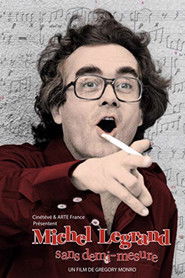
Michel Legrand entered the Paris Conservatory at age ten and left convinced that classical music was too narrow a cage. In 1954 he recorded I Love Paris, a album of jazz arrangements that sold eight million copies, far beyond anything the industry expected. It was the first sign that this French musician would not respect the boundaries between popular genres and classical training.
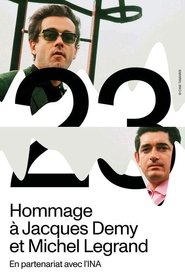
His collaboration with director Jacques Demy changed the way people understood European cinema. Before shooting The Umbrellas of Cherbourg in 1964, they spent months locked away searching for a structure in which every line of the script would be sung. Producers believed the experiment would be a financial disaster, since audiences would never sit through ninety minutes of melodic dialogue.
And the gamble paid off.
The film won the Palme d'Or at Cannes, and Legrand became the sonic architect of the French New Wave. He had no interest in simply backing images with background music. He wanted the score to be a character with a voice of its own, capable of suffocating or freeing the viewer with every beat. With The Young Girls of Rochefort in 1967, he brought the spirit of Broadway to the streets of a French port town through complex orchestrations that blended jazz with baroque music.
She never sought easy applause.
The Assault on California's Studios
In 1968, he arrived in the United States to work on The Thomas Crown Affair. Steve McQueen wasn't convinced by the initial sound concept, but Legrand composed The Windmills of Your Mind, and the studio realized they had a hit on their hands. That song earned him his first Oscar of the three he won during his time in Hollywood.
During the 1970s his pace of production was frantic. He composed the score for Summer of '42 in 1971 and later the one for Yentl in 1983, where Barbra Streisand demanded absolute technical precision. Legrand always wrote by hand and did without assistants to orchestrate every instrument, a habit that kept his copyists in constant tension.
But his success at the major studios never pulled him away from his true passion for the piano. On his world tours, he often said jazz was his only real freedom, because it let him escape the rigidity of film recordings. Even in his later years, he kept seeking projects that forced him to rethink his style and technique at the keyboard.
Orson Welles's Final Score
In 2018 he took on a posthumous challenge.
He composed and recorded the music for The Other Side of the Wind, Orson Welles's unfinished film that Netflix rescued decades after its original shoot. Legrand had to imagine what Welles would have wanted for that chaotic, experimental cut. It was one of his last major creative efforts before his death in January 2019.
Because for him music was not an ornament but a physical necessity. His final catalog includes more than two hundred film and television scores. His funeral was held at the Orthodox Cathedral of Saint Alexander Nevsky in Paris, and his remains rest in Père Lachaise Cemetery. The latest official figure for his global sales exceeds twenty million physical albums.