The Man of a Thousand Faces
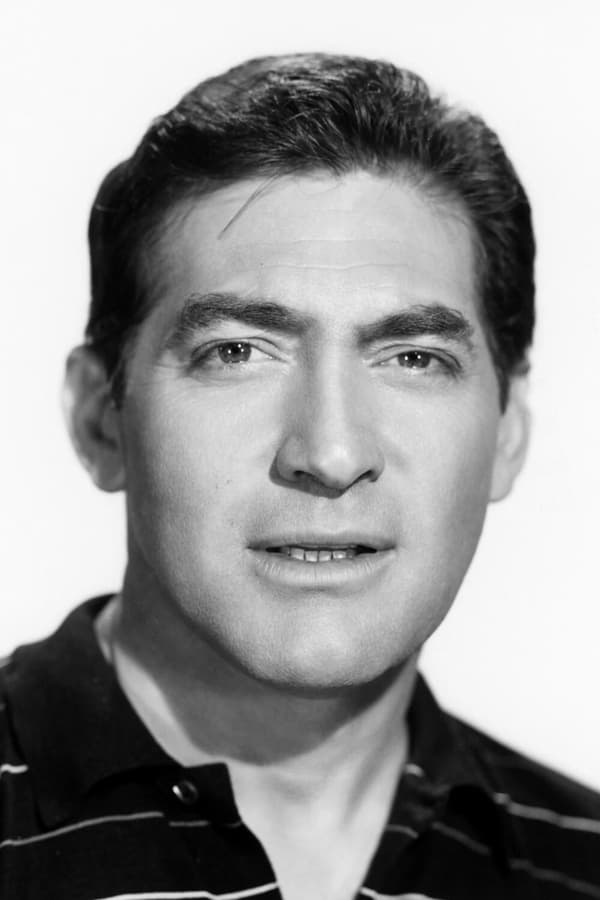
Norman Alden never needed his name to appear first on the posters for the public to know exactly who he was. His weathered, straightforward face worked for five decades as the invisible glue of the Hollywood industry.
In 1957, he made his debut on the series The 20th Century-Fox Hour, and from that point on he never stopped piling up credits. He wasn't chasing critical acclaim or fashion magazine covers. His ambition was more pragmatic: to work every week of the year, whether the role was a sheriff, a mechanic or the villain of the day.
He was the ultimate supporting player.
That lack of ego allowed him to outlast generations of fleeting stars who disappeared while he kept getting scripts. In 1966, he appeared in the Batman series playing one of the Joker's henchmen. But his real asset wasn't just his look, because his voice carried a weight that casting directors quickly picked up on.
He appeared in series such as The Untouchables and Gunsmoke because his square jaw fit perfectly the standard of masculinity that television demanded in the 1960s.
The Voice That Defined a Childhood
Many viewers don't know that Alden lent his voice to characters who are part of the cultural DNA of the United States. In 1963, he brought Kay to life in the Disney film The Sword in the Stone. His vocal range was so solid that animation producers kept calling him for large-scale projects.
His voice was so steady that animation producers kept calling him.
In 1973, he accepted the role of Aquaman in the series Super Friends. That decision kept him tied to the world of superheroes for years. But Alden never neglected live-action film. In 1970, he appeared in Tora! Tora! Tora! playing Major Truman Landon.
His ability to blend into any setting allowed him to work with directors of the caliber of Steven Spielberg and Robert Zemeckis. He never caused problems on set and always arrived with his lines memorized. He was a method actor without the pretentiousness of the method.
The Owner of the Hill Valley Café
In 1985, he shot a brief sequence that would earn him lasting recognition among science fiction fans. He played Lou, the café owner in Back to the Future. That man who told a young George McFly that he needed to have some backbone is one of the most memorable presences in the film.
He needed only a few minutes on screen for his face to stick in the collective memory.
Alden understood that in movies there are no small roles if the actor knows how to make the most of the space. In 1988, he worked on They Live under the direction of John Carpenter. His pace of work was frantic, and he made no distinction between film genres or budgets.
Because for him acting was a hands-on craft, almost artisanal, far removed from the red carpet glare. In 1994 he appeared in Ed Wood by Tim Burton, playing Bill McCoy. That was one of his last major big-screen appearances before he gradually scaled back his work due to his age.
Norman Alden died of natural causes on July 27, 2012 at a care home in Los Angeles. Over his lifetime, he racked up more than 2500 credits across productions of all kinds.