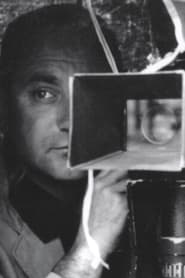
Exile in the Suburbs
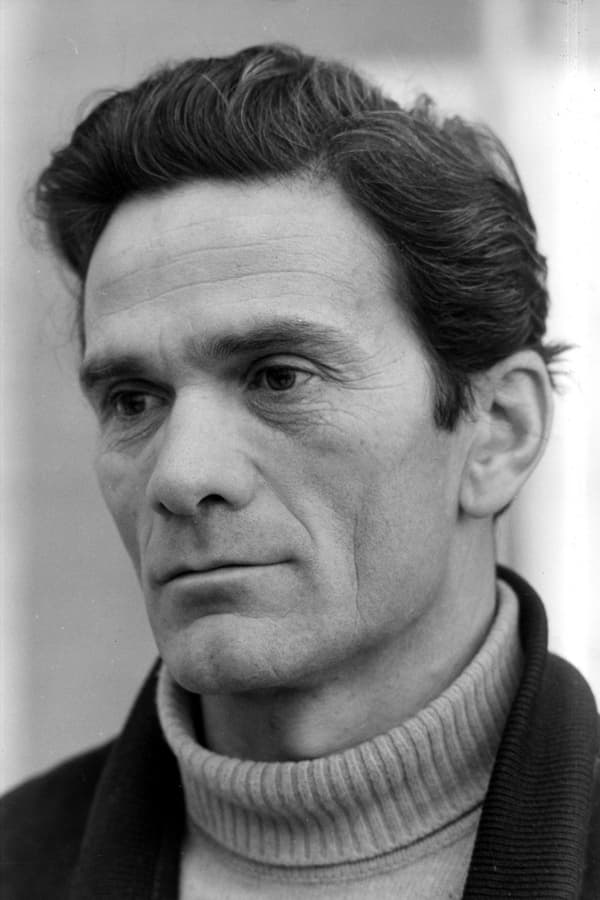
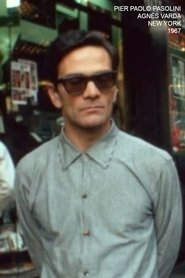
Pier Paolo Pasolini arrived in Rome in 1950 with a cardboard suitcase and a charge of corrupting a minor hanging over him. He had no money and no safety net. He was fleeing Friuli after being expelled from the Communist Party and losing his job as a teacher at a rural school.
That forced exile became the engine of his work.
He settled in the shantytowns on the edge of the capital to live among the ragazzi di vita who would later star in his novels. For him, those wastelands represented a preindustrial purity that the Italian bourgeoisie despised. Before filming his first feature, he wrote dialogue for Federico Fellini on Nights of Cabiria because he knew the street slang better than anyone in the industry.
His debut behind the camera came in 1961 with Accattone.
The film showed the misery of the suburbs without sentimental filters or the compassionate gaze of earlier neorealism. He used nonprofessional actors recruited from the same neighborhoods where their characters lived. Conservative critics branded it obscene, while the Vatican watched his every move for the way it portrayed marginal life.
Cinema as a Weapon
Pasolini was not interested in provocation for its own sake. His outlook was deeply religious despite his militant atheism and his unorthodox Marxism. With The Gospel According to St. Matthew in 1964, he filmed the life of Christ with a restraint that disarmed his critics. He shot in the arid stones of Matera and cast his own mother as the elderly Virgin Mary.
It was an unexpected critical success.
Then came the Trilogy of Life phase. Between 1971 and 1974, he filmed The Decameron, The Canterbury Tales, and Arabian Nights. In these films, he celebrated the human body and sex as forms of resistance against modern consumerism. But he soon renounced that visual joy when he saw the system commercializing every trace of sexual freedom.
He published a scathing article in which he renounced these works, arguing they were already harmless to those in power.
A Corpse at the Idroscalo
His last film was a descent into hell from which there was no return. In 1975, he finished editing Salò, or the 120 Days of Sodom under a climate of constant threats. It is an unbearable film that transposes the writings of the Marquis de Sade to fascist Italy in 1944. Filming was an exercise in extreme discipline, with actors enduring scenes of physical and psychological violence unprecedented in European cinema.
Pasolini did not live to see the film's commercial release in theaters. On November 2, 1975, his body was found brutally mutilated on a beach in Ostia, near Rome. He had been run over with his own car after a brutal beating that completely disfigured his face.
A 17-year-old man named Pino Pelosi confessed to the crime, but the shadows of a political conspiracy never fully disappeared. In 2005, Pelosi himself retracted his initial confession and admitted that three people with southern accents took part in the murder.
The autopsy confirmed that his chest was caved in and several ribs were broken by the weight of the vehicle.