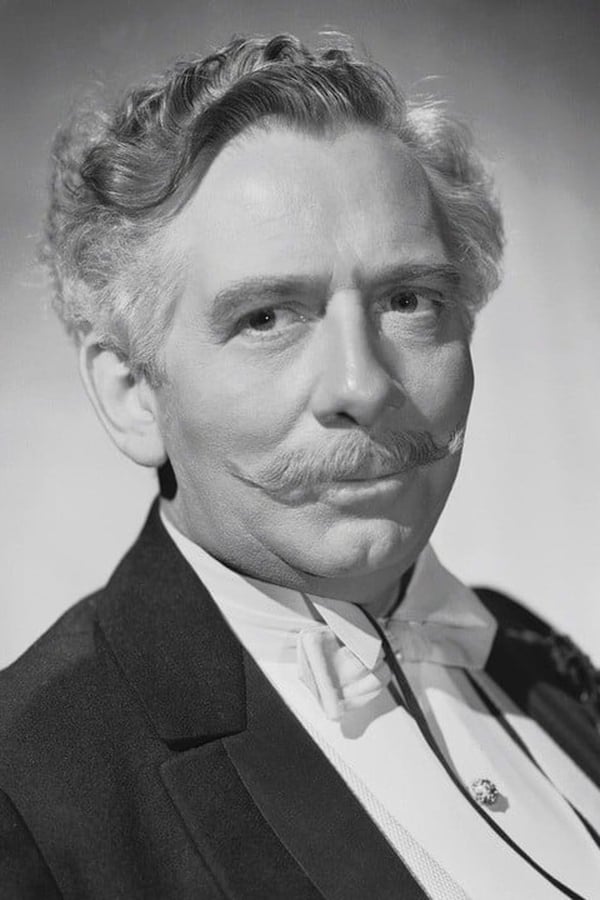
Ray Collins arrived in Hollywood with a voice already worn down by thousands of hours of radio and theater behind him. He wasn't a young hopeful chasing fortune but a veteran of the New York stage who understood perfectly the weight of silence on a film set.
In 1934, he joined Orson Welles's Mercury Theatre, where he began to forge his identity as the indispensable supporting player. Collins didn't need the center of the frame to dominate the story. His ability to play men of authority, often cynical or morally ambiguous, set him apart from the flat roles Hollywood usually reserved for supporting actors of the era.
Orson Welles's Right-Hand Man
His film debut was none other than Citizen Kane (1941), where he played Jim Gettys. In that film he played Kane's political rival with a cool precision that contrasted with Welles's volcanic energy. It was a precise casting choice. Collins brought the sobriety needed to give the film's visual excess a human and believable counterpoint.
Collins was the anchor of every scene.
His relationship with Welles continued in The Magnificent Ambersons (1942). In this production he showed he could carry complex dialogue while the camera moved in grueling long takes. But the 1940s studio system didn't always know what to do with an actor of his depth. So he ended up taking one project after another, where his mere presence elevated mediocre scripts.
During that decade he appeared in titles such as Leave Her to Heaven (1945) and The Best Years of Our Lives (1946). In the latter film, his role as a banker is an example of how to convey postwar bureaucracy without slipping into caricature. He worked with an economy of gesture that still feels modern and direct today.
The Shadow of the Law on the Small Screen
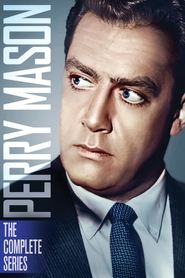
By the mid-1950s, movies had begun to lose interest in older characters. But television offered him the role that would fix him in the collective memory of several generations. In 1957, he took on the role of Lieutenant Arthur Tragg in Perry Mason.
And the gamble paid off.
He played Tragg for nearly a decade, with a mix of professional weariness and respect for his adversary. His health began to falter in the early 1960s, but he stayed in the show's cast until walking on set became physically impossible. He appeared in 241 episodes of the original production before his illness forced him to retire from the spotlight for good.
He never chased easy applause or the covers of the gossip magazines of the time. He preferred the technical precision of an actor who knows his job is to make the lead shine even brighter. His career is defined by that lack of ego, which is so hard to find in the entertainment industry.
He died of emphysema at Santa Monica Hospital on July 11, 1967.