The brothel as an acting school
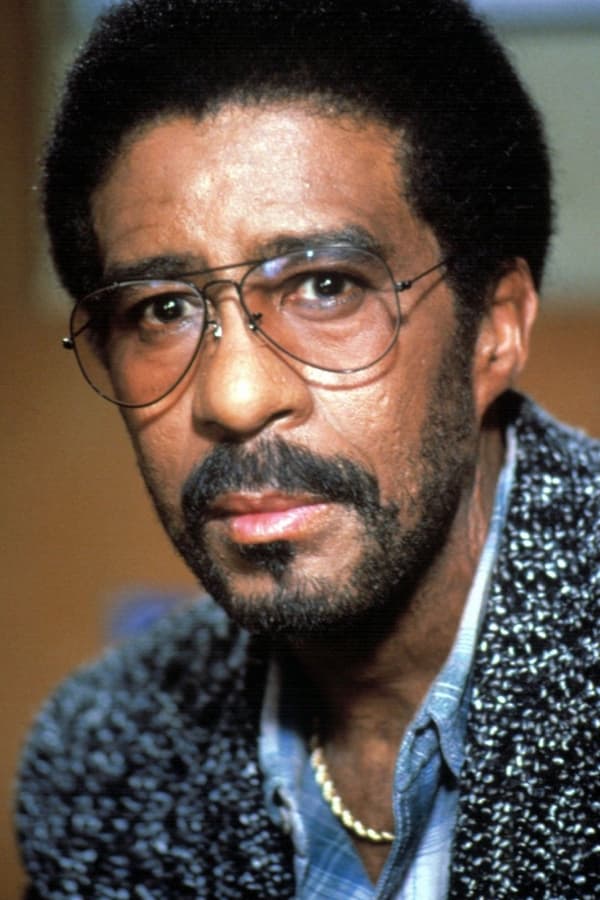
Richard Pryor grew up in a brothel in Peoria, Illinois. His grandmother ran the business, and his mother worked there as a prostitute. It's not the typical background for a Hollywood star, but it explains perfectly why his comedy never had filters and was never afraid of the grit of the street.
Early in his career he tried to become the new Bill Cosby. He wore impeccable suits and told clean jokes on late-night shows, because that was what was expected of an aspiring Black comedian in the sixties. But in 1967 he suffered a nervous breakdown onstage in Las Vegas and simply walked off after asking the audience what the hell he was doing there.
Pryor was a public menace to television in his era.
He moved to Berkeley and began hanging out with intellectuals from the Black Power movement. There he discovered that his real voice wasn't in polite jokes but in the rawness of his own life. He returned to the stage with language loaded with profanity and a chameleon-like ability to give voice to the junkies, pimps and outcasts he had known in his childhood.
In 1974 he won a Grammy for his comedy album That Nigger's Crazy. It was the moment the industry understood that white audiences also wanted to hear the truth about racism and marginalization, as long as it came wrapped in fits of hysterical laughter. Pryor didn't tell jokes; he told traumas.
The fire and the years of box office glory
His move into film was inevitable. He worked well as a supporting actor in films like Lady Sings the Blues in 1972 (where he played Piano Man), but his real goldmine was the partnership he formed with Gene Wilder. The chemistry between the two in Silver Streak in 1976 immediately broke racial barriers at the American box office.
And then everything burned in 1980.
Pryor doused his body with high-proof rum while smoking freebase cocaine and ran out through his Los Angeles neighborhood engulfed in flames. He suffered second- and third-degree burns over fifty percent of his body, and doctors gave him little chance of survival. But he survived, and he turned that suicide attempt into the centerpiece of his best comedy special.
In Richard Pryor: Live on the Sunset Strip, filmed in 1982, he addressed the incident with brutal honesty. He mocked his own addiction and how the fire had taught him to value sobriety. It remains one of the most raw stand-up performances ever recorded.
Laughter was his only defense.
During that decade he became the highest-paid actor in the world. He signed a 40 million dollar deal with Columbia Pictures in 1983 to star in and produce his own projects. That period produced box office hits such as Stir Crazy and The Toy, although critics began to question whether money was softening his edge.
Physical decline and the final silence
His health took a toll much sooner than expected. In 1986 he was diagnosed with multiple sclerosis, and his mobility began to decline sharply. He kept working for as long as he could, and in 1989 he filmed See No Evil, Hear No Evil alongside Wilder again, although his movements were already slow and his gaze seemed to drift at times.
In 1991, he filmed Another You. It was the last time he shared the screen with his close friend Gene Wilder, and the movie turned out to be a complete critical and box office failure. Filming was torture for Pryor because of the muscle spasms and memory loss caused by his degenerative disease.
But he never stopped trying to be funny. In 1995 he appeared in the series Chicago Hope playing a patient with multiple sclerosis, and earned an Emmy nomination for his realism. It was an exercise in medical and professional exhibitionism that few actors of his stature would have agreed to perform on camera.
He spent his final years in a wheelchair at his home in California. His ability to speak faded, and his presence in the media nearly disappeared. He died of a heart attack on December 10, 2005 at a hospital in Encino.
His last credited big-screen appearance was a brief role in Lost Highway by David Lynch in 1997.