The Leading Man Who Hated His Own Face
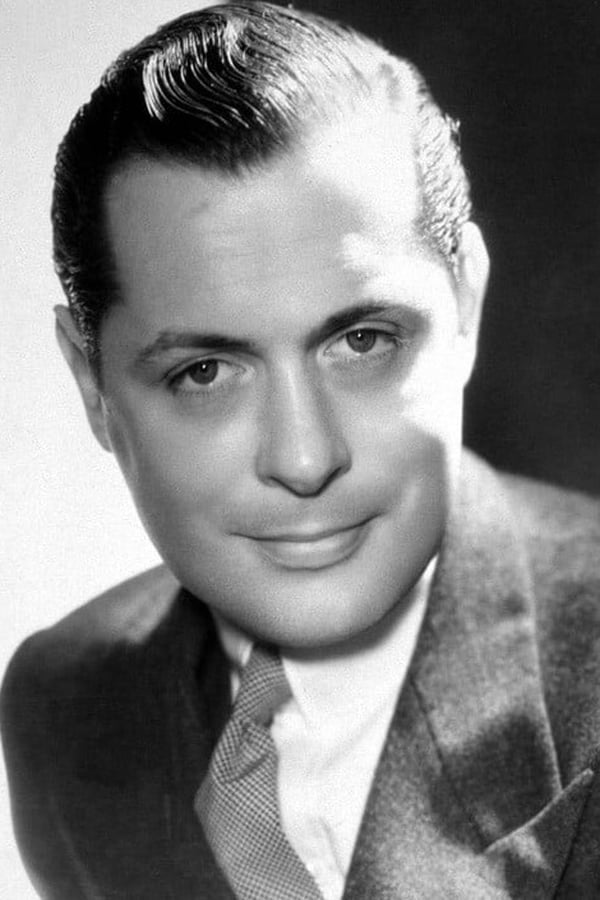
Robert Montgomery was not born to be poor, but his father's suicide and the 29 crash forced him to make his own way in New York. He had an impeccable look and a jaw carved for high comedy. So he ended up at Metro-Goldwyn-Mayer playing tuxedo-clad types who sipped martinis while delivering witty lines.
He earned a fortune, and female audiences filled theaters to watch him smile alongside Norma Shearer in Private Lives. But Montgomery hated the image of a privileged rich boy that the studio forced him to project in every contract. He wanted blood, grime and characters that audiences of the time would not find likable.
In 1937, he threatened to break his contract unless he was allowed to star in Night Must Fall. The role was that of a psychopathic killer who kept his victim's head in a hatbox. MGM executives believed it would destroy his commercial career for good.
It was a suicidal decision for any other star of the era.
The film was a critical success and earned him his first Academy Award nomination. Montgomery proved that beneath his dandy image lay an actor capable of unsettling audiences with a single icy stare. That was the exact moment he stopped being a studio puppet and began setting his own rules of the game.
The Subjective Camera and the Failed Experiment
After serving in the Navy during World War II, he returned to Hollywood with one fixed idea in mind. He wanted to direct, and to do it in a way no one had dared to attempt in commercial cinema. In 1947 he shot Lady in the Lake, an adaptation of Raymond Chandler in which the camera literally became the protagonist's eyes.
The viewer sees only what detective Marlowe sees. Montgomery's face barely appears, reflected in a mirror now and then or during the opening credits. It was a radical technical gamble that did without the actor's physical magnetism to focus entirely on visual storytelling.
Critics were not kind to the experiment, and audiences felt seasick in movie theaters. Today, however, the film is studied in directing schools for its technical boldness and its refusal to follow the conventions of classic cinematic language. Montgomery was not after easy applause; he wanted to push the limits of what a lens could tell.
Shortly afterward, he directed Ride the Pink Horse in 1947. This time he opted for a much drier, more violent film noir style, set in New Mexico. The film moved away from the glamour of Los Angeles to show a dusty, corrupt border that few directors dared to portray with such brutal honesty.
From the Film Set to the Oval Office
His influence reached well beyond the 35-millimeter cameras. Montgomery served as president of the Screen Actors Guild on two separate occasions and clashed with the mobsters who tried to control production budgets in California. He was a man of order, with strongly conservative political views that led him to an unexpected fate.
In 1954, he became the first television image consultant for a President of the United States. Dwight D. Eisenhower did not know how to look into the camera or what to do with his hands during televised speeches. Montgomery taught him how to wear makeup for the studio lights and how to manage the timing of the teleprompter.
Eisenhower trusted his aesthetic judgment implicitly.
Thanks to his advice, the president improved his connection with voters through the small screen. Montgomery understood before anyone else that modern politics would be, fundamentally, a matter of staging and audiovisual language. He designed the public image of the most powerful man in the world as if he were the lead of a high-ratings drama.
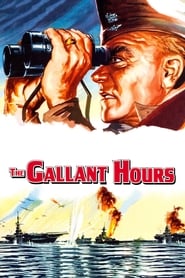
His career in front of the camera gradually faded while his interest in television production and consulting grew. In 1960, he produced The Gallant Hours, a biopic about Admiral Halsey that stood out for its complete lack of battle scenes. He preferred to focus on the psychology of command and the loneliness of those who must make life-or-death decisions.
Robert Montgomery died in New York on September 27, 1981, of colon cancer. He was 77 years old and left behind a filmography of more than 60 titles as an actor, plus a dozen projects as a film producer. His remains were cremated, and the ashes were handed to his family without any major public ceremony.