Clicky

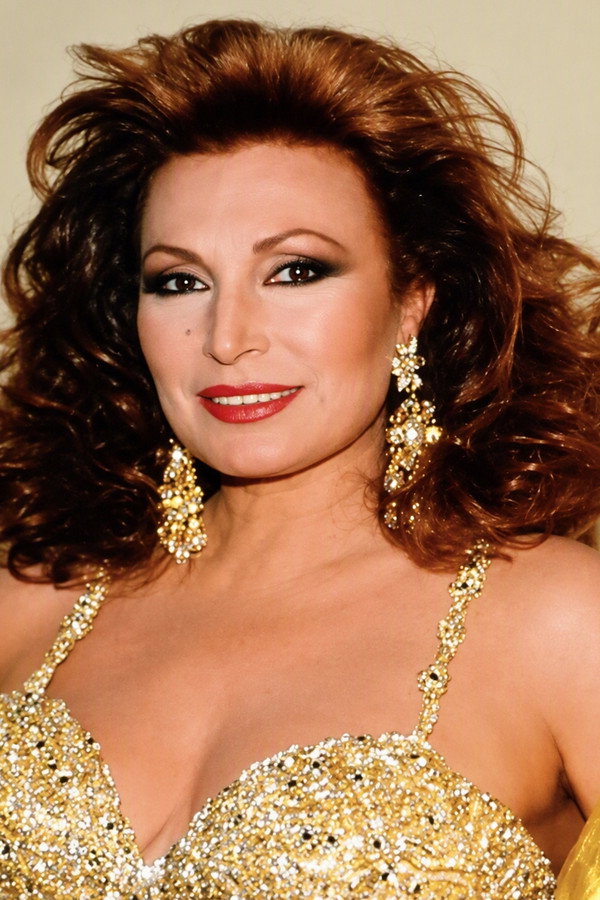
Rocío Jurado
FameScore#8,061of 8,152 celebrities= no change
See breakdownRanking →
Popularity4
Views0
Photos0
Fans0

Fans: 0 (actual figure). Will start scoring once there is data on more celebrities.

Rocío Jurado

ActressSinger
Date of birth
September 18, 1940
Date of death
June 1, 2006 (65 years old)
Place of birth
Chipiona (Spain)
Nationality
Como una ola 1981 Como yo te amo 1979 Se nos rompió el amor 1985 Señora 1979 That Man 1979 Starting Point 1989
Spanish singer and actress of copla and romantic ballads, nicknamed "La más grande" (The Greatest). She was known for her powerful voice and stage temperament, becoming one of the most influential figures in Spanish-language music.
0
Total

views

0
Today
—
0
This week
—
0
Last 30 days
—
0
This month
—
0
This year
—

Fernando Fernán Gómez spent three weeks convincing her to shoot topless in a boarding house on Calle Fuencarral. Spain was then at 1976, trying to shake off forty years of censorship with cheap nudity and easy box office. But Rocío Jurado wasn't chasing cheap applause from the nonstop double-feature cinemas. She wanted to test herself with a demanding director and prove that her stage presence could hold up in a close-up without resorting to vocal flourishes.

That movie was called La querida.

It was an absolute commercial disaster. Theaters emptied within ten days because audiences expected a folk singer performing flamenco-style songs and instead found a suffocating drama about a woman kept by a provincial landowner. The film grossed barely fifteen million pesetas, and the producers swore they would never again risk a single peseta on her in author-driven roles.

Folklore as a Commercial Trench

Before that misstep, Francoist cinema had already exploited her to the fullest. She debuted in 1963 with Los guerrilleros alongside Manolo Escobar, locked into the predictable mold of cardboard musical comedies that filled village cinemas in August.

Let's be honest. Those movies worked as little more than catalogs for record sales, where the plot didn't matter and the only thing that counted was the girl from Chipiona letting loose with her vocal power every twenty minutes. Titles like Trial of a Star in 1966 or A Not-So-Decent Girl in 1971 did well at the box office thanks to her charisma, even though the scripts were flimsy.

And she knew it all too well.

So she decided to put her energy into recording studios. In the late 1970s she teamed up with composer Manuel Alejandro and shook things up with the album Señora in 1979. That work changed the rules of the sound game and sold millions of copies across Latin America without having to answer to any film producer.

Settling Accounts with Carlos Saura

Film came calling again when Carlos Saura was preparing to shoot El amor brujo in 1986. He did not give her an on-screen role, because Saura preferred the dance ensemble of Cristina Hoyos, but he handed her the acoustic heart of the project.

Jurado recorded Manuel de Falla's scores with the National Orchestra of Spain conducted by Jesús López Cobos. Those sessions at the Kirios studios were tense, because the director from Aragon demanded a dry restraint that clashed with the gutsy, expansive style of the woman from Cádiz. Saura won out through sheer technical persistence.

The soundtrack sold more than four hundred thousand copies on the international market, and European critics praised the raw edge of its songs. Six years later she worked with the same director again on Sevillanas, shooting on 1992 on a white set where only a clean voice and Vittorio Storaro's cinematography mattered.

The Last Whim on Celluloid

No one in the industry understood her return to acting in 1993. She agreed to star in Lola se va a los puertos under the direction of Josefina Molina, reviving the dramatic text by Antonio and Manuel Machado that Juan de Orduña had already filmed in 1947.

It was an expensive and troubled production.

Rocío Jurado oversaw the costumes, reviewed every take at the monitor, and debated the pacing of the edit shot by shot. Box office coldly turned its back on her. The film cost three hundred and fifty million pesetas, with funding from public television, and sold just over sixty-five thousand tickets during its run in theaters. It closed its profile at the Instituto de la Cinematografía with a tally of twelve feature films and an unrecoverable accounting loss for its producers.

Show

Facts about Rocío Jurado

Real name, languages, family and other verified details.

Birth nameMaría del Rocío Trinidad Mohedano Jurado
Also known asLa más grande · La chipionera · La insuperable · La niña de los premios
GenerationSilent Generation (1940)
Born on aWednesday
Chinese zodiacDragon
Active since1963 (43 years of career)
DebutLos guerrilleros (1963)
at age 22
Languages spokenSpanish
InstrumentsVoice
Member ofBrothers
Place of DeathAlcobendas
Cause of Deathpancreatic cancer
Resting PlaceSan José municipal cemetery

Family

Marriages
  • Pedro Carrasco (1976–1989)
  • José Ortega Cano (1995–2006)
Father
  • Fernando
Brothers
  • Amador Mohedano
Children

2 children

Awards and nominations for Rocío Jurado

5awards
0nominations

Awards won

  • 2006Gold Medal of Work Merit
  • 1999Dearest Son of Cádiz province
  • 1995Gold Medal of Merit in the Fine Arts
  • 1986Medal of Andalusia
  • 1984Gold Medal for Tourism Merit

Source: Wikidata

Trivia about Rocío Jurado

Things you probably didn't know about Rocío Jurado

On her first radio prize, won in 1958 on Radio Sevilla, she received 200 pesetas, a bottle of soda, and a pair of stockings; because she won contests so easily, she was nicknamed "the prize girl."
To be able to perform in tablaos while still a minor, during her early years in Madrid she claimed to have been born in 1944, altering the age she publicly gave.
In 1976, she married boxer Pedro Carrasco at the Sanctuary of the Virgen de Regla, wearing a traditional Spanish dress with a peineta comb and ruffles.
In 1986, she interviewed Julio Iglesias for the magazine Lecturas, in an unusual format where both artists asked each other questions face to face.
In a 1986 television interview with Mercedes Milá, she publicly defended her gay fans and said they were "a race created by God."
In 2000, she received the "La voz del milenio" award in New York as the best female voice of the 20th century, presented by entertainment journalists.
Her wedding to bullfighter José Ortega Cano, held in 1995 at the Dehesa Yerbabuena estate, drew more than 2,300 guests.
She sold more than 16 million records, a figure that placed her among the Spanish singers with the highest international sales.
Character silhouette
Rocío Jurado
167 cm
User silhouette
Anonymous
180 cm

Rocío Jurado's height

Rocío Jurado is 167 cm tall.

Have you ever wondered how you'd look next to Rocío Jurado? Enter your height in your profile (or create your account for free) and you'll see your silhouettes side by side on every profile page.

Rocío Jurado on our lists

Discover more celebrities with the same nationality, profession, sign, birth year or height.

Movies and TV appearances

Rocío Jurado by the numbers

Their career, roles, and the people they've worked with.

10movies
4appearances as themselves

Best-known roles

  • Los guerrilleros
    Los guerrillerosLa Salvadora · 1963Age 22
  • Lola la Piconera
    Lola la PiconeraLola · 1970Age 29
  • A Not-So-Decent Girl
    A Not-So-Decent GirlSilvia Martín · 1971Age 30
  • La Lola Heads to the Ports
    La Lola se va a los puertosLola · 1993Age 52
  • Trial of a Star
    Trial of a StarRosa Lucena · 1966Age 25
  • The Beloved Woman
    La queridaManuela · 1976Age 35

Genres they work in most

  • Music38%
  • Comedy23%
  • Drama23%
  • History8%

Has starred as Lola in 2 titles.

Popularity of Rocío Jurado

14KWikipedia views (30 days)
▼ 18%compared to the previous month

Daily visits to their English Wikipedia article over the last 60 days.

Community ratings are exclusive to Premium users. Discover Premium