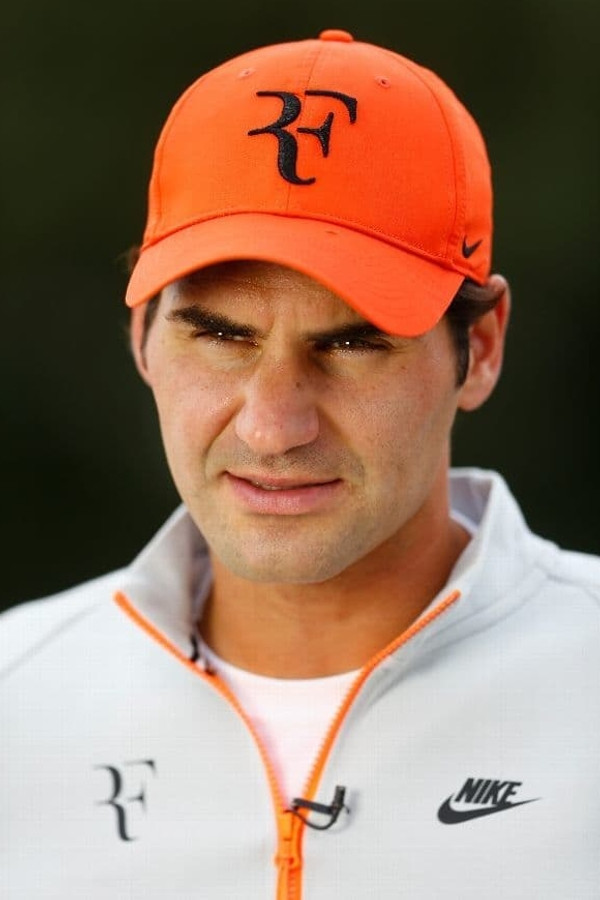
On the night of July 6, 2008, London's darkness swallowed Wimbledon's Centre Court. As rain threatened to suspend the fifth set, Roger Federer adjusted the stringing of his racket without blinking. That duel against Rafael Nadal had the rhythm of a classic tragedy, a clash shot on invisible celluloid that ended at 21:16 in a nearly funereal twilight.
For those of us who spend our lives analyzing film editing, Federer was never an ordinary athlete. His tennis worked like a rigorous stage production, where every movement concealed the physical effort behind a deceptively light choreography.
But the legend took years to take shape.
Taking Down the Angry Kid
In the late nineties in Basel, a young Roger was smashing rackets against metal fences every time he missed an easy forehand. His coaches at the Ecublens training center were driven to despair by a overflowing talent who could not control his own frustrations.
In July 2001, that emotional volcano passed his first major test of composure on the grass of the All England Club. Federer reached the quarterfinals against Pete Sampras and ended the American's 31-match winning streak with a one-handed backhand that foreshadowed a generational handover.
And the victory did not immediately quiet his doubts.
The car accident death of his coach Peter Carter in August 2002 forced a sudden psychological maturity. Federer realized that throwing away matches through mental laziness was an intolerable lack of respect for his own craft.
So in July 2003, he opened his Grand Slam tally on British grass against Mark Philippoussis. Over the following four years, he went on to spend 237 consecutive weeks as world No. 1 in the rankings, dominating every fast surface with relentless consistency.
The Planned Decline and the Reinvention
Sporting dynasties, like the great Hollywood studios, sooner or later run into a wall of reality. Nadal's relentless physical power on clay and Novak Djokovic's elasticity forced Federer to rethink his entire tactical approach so he would not be relegated to a supporting role.
His knee said enough.
In July 2016, a torn meniscus after a domestic accident sidelined him from the tour for six full months. For any veteran player at age 34, that felt like the definitive end of his career.
But Federer returned at the 2017 Australian Open with a wider-frame racquet and an aggressive backhand that struck the ball before the bounce. He lifted that trophy in Melbourne by beating Nadal in a memorable fifth set after coming back from a break down, reaching a career total of 103 ATP singles titles.
The Final Cut and the Home Footage
When he announced his retirement at the Laver Cup in London in September 2022, Federer decided to film every minute behind the scenes. He hired director Joe Sabia to capture that farewell, with no intention of screening it in theaters or distributing it on public platforms.
After all, the locker room was always his private territory.
That home footage ended up in the hands of British director Asif Kapadia, an Oscar winner for the documentary Amy and the editor of titles such as Senna and Diego Maradona. Kapadia shaped those twelve days of footage into the feature documentary Federer: Twelve Final Days, released worldwide in June 2024.
The film includes no fictionalized reconstructions or crowd-pleasing heroics. The camera captures close-ups of bandaged knees, heavy silences before walking through the locker room tunnel, and the simultaneous tears of Federer and Nadal, holding hands after playing their last doubles match together.
The final cut of Federer: Twelve Final Days locked its structure at 88 minutes of edited footage, drawn from hundreds of hours of analog and digital recordings with no voice re-recording in the booth.