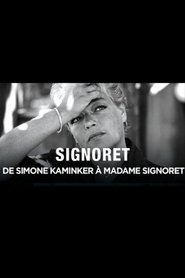
The Weight of a Borrowed Name
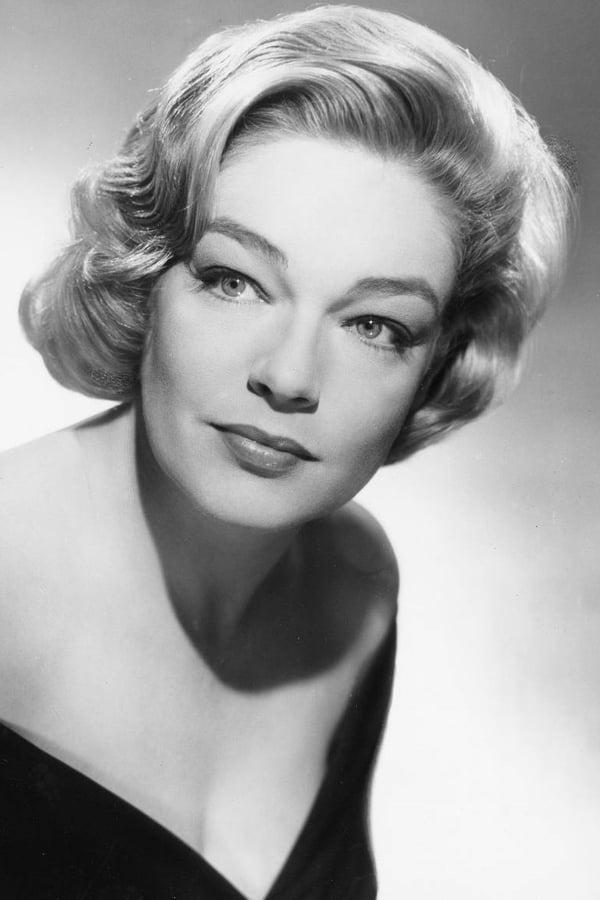
Simone Kaminker had to bury her real surname to make ends meet. During the Nazi occupation of Paris, her Jewish origins on her father's side (a translator who fled to London to join the resistance) were a professional death sentence. So she adopted her mother's maiden name and began scraping by as an extra in mediocre film shoots.
She wasn't chasing glory.
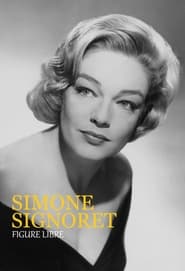
But her face had something the camera picked up before the directors did. It combined heavy eyelids with a jaw that never apologized for existing. In 1942 she landed small roles that barely covered the rent but let her watch up close how the stars of the era moved. And she learned fast.
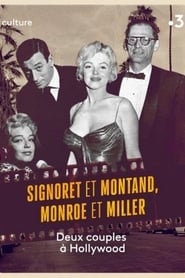
Her presence at the Café de Flore in Paris put her at the center of the postwar intellectual storm. There she met Yves Montand in 1949. They married two years later and formed the most closely watched and politicized couple in France. Simone never understood cinema without social commitment.
The Woman Who Didn't Need Filters
In 1952 she shot Casque d’Or under the direction of Jacques Becker. Audiences discovered that sensuality didn't always go hand in hand with female fragility. Her performance as Marie was a sharp blow to an industry that preferred more docile, predictable actresses.
Hollywood tried to tame her.
She arrived in London in 1958 to shoot Room at the Top because the script let her play a woman who truly suffered. She won the Best Actress Oscar in 1960. She was the first French actress to achieve this with a foreign production, and it broke the mold at the major American studios. But she didn't stop to celebrate the contract of her life.
She chose to return to Europe to work with directors who wouldn't ask her to go under the knife. In 1969 she shot L’Armée des ombres under Jean-Pierre Melville's direction. There she proved that maturity was her greatest dramatic tool, and that the passing of time was not an enemy but an acting ally.
A Refuge in the Written Word
In the late 1970s her health began to suffer from years of smoking and drinking. Even so, she found the strength to shoot La Vie devant soi in 1977 and win the César Award. The role of Madame Rosa stood as a statement of intent about old age, with no frills and no visual lies.
And the gamble paid off.
She published her memoirs in 1976 under a title that became famous: La nostalgie n’est plus ce qu’elle était. The book sold more than one million copies within a few months because Simone wrote the way she acted. She avoided unnecessary metaphors and preferred raw honesty about her relationship with Montand and her political failures.
She died at her property in Autheuil-Anthouillet on September 30, 1985, at the age of 64.