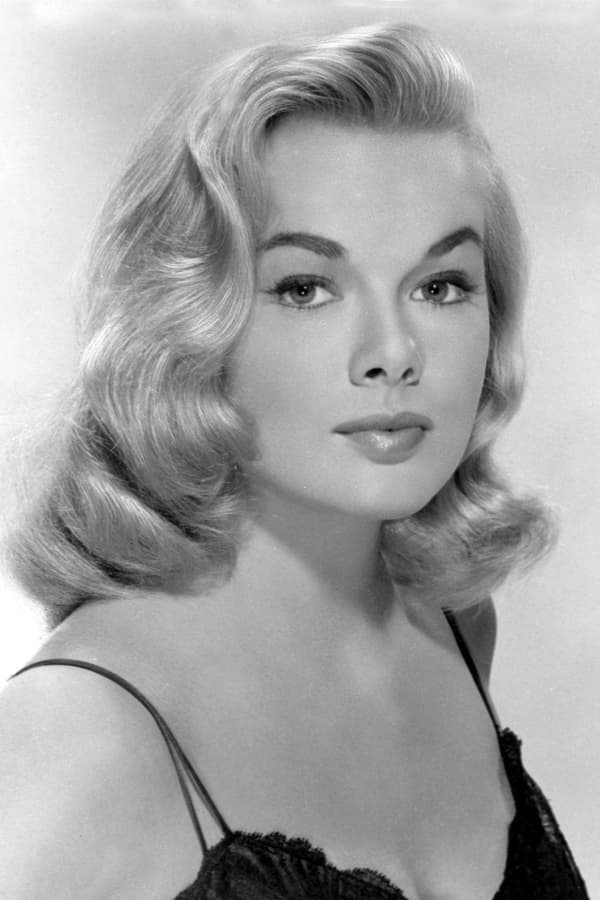
Marjorie Hellen arrived in Los Angeles at eighteen with a determination that intimidated the agents of the day. It was 1954 when she signed her first contract with 20th Century Fox.
It was a factory for young flesh. She knew it, so she decided that her real identity would not be part of the business. In 1959, she legally changed her name to Leslie Parrish to keep her past as a runway model from limiting her acting options.
It was a purely logistical decision.
That same year, she landed the role of Daisy Mae in the film version of Li'l Abner. Audiences fell in love with her cartoon-like style, but she was already thinking about her next move. Parrish never quite fit the mold of the naive blonde of the late 1950s.
She had an analytical mind that clashed with directors who only wanted a living set piece. Before shooting, she studied the budgets and lighting of the sets with a curiosity few actors showed at the time.
John Frankenheimer's Political Canvas
Her chance to prove she could carry a serious drama came in 1962. John Frankenheimer chose her to play Jocelyn Jordan in The Manchurian Candidate. She shared the screen with Laurence Harvey and Frank Sinatra in one of the most suffocating storylines of the Cold War.
Her performances were restrained and precise. But the industry remained fixated on her outward image. During the 1960s, she became a familiar face on television, appearing in series such as Star Trek or Batman.
In the episode Who Mourns for Adonais? of 1967, she played Lt. Carolyn Palamas. That shoot was exhausting, due to the demands of the costumes and the heat of the lights at the Desilu studios. For her, working in television was a way to fund her real interests.
The industry never fully understood her priorities.
Parrish was more interested in what happened outside the studios. She began getting involved in civil rights movements and questioning how the big contracts worked. By 1964, she was already actively involved in local and national politics.
Planes, Books and the End of the Cameras
Her life took a technical turn when she met writer Richard Bach in 1973. It happened during the production of Jonathan Livingston Seagull. It was not a red-carpet romance.
She was interested in the author's philosophy and in aviation. In fact, she became an experienced pilot and managed much of the business arising from Bach's works. They married in 1977, and Parrish took on a behind-the-scenes role as producer and editor.
She handled the logistics and structure of several literary projects that sold millions of copies worldwide. She was actively involved in creating The Bridge Across Forever, a book that recounts her own relationship as a couple.
Film was no longer the center of her universe.
From 1980 onward, her on-screen appearances were incidental. She preferred to focus her efforts on environmental activism and the protection of natural areas in the state of Washington. There, she devoted herself to land conservation and municipal politics, far from the spotlight of California.
In 1999, she divorced Bach after years of professional and personal collaboration. Leslie Parrish kept her residence on an island, far from any nostalgic Hollywood circuit. The last official entry in her production record dates to 1984 as an associate producer.