The Art of Being America's Mother
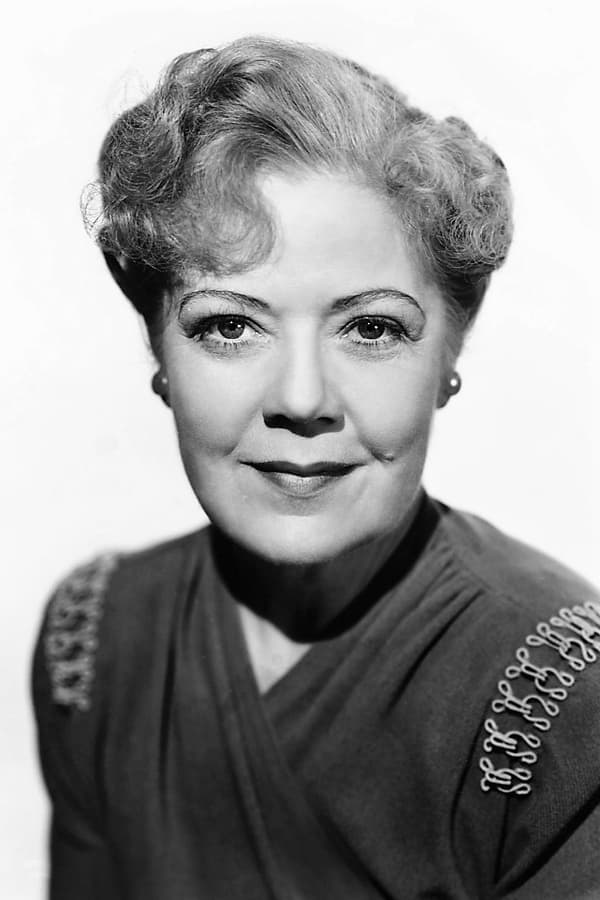
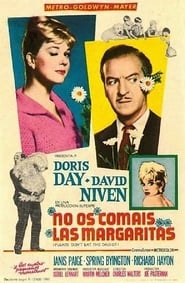
Spring Byington never needed to be the absolute lead for audiences to remember her face after leaving the theater.
In 1938, she earned an Oscar nomination for her role in You Can't Take It with You. That nomination confirmed that the industry needed actresses who could carry the emotional weight of a scene without stealing the spotlight from the leading stars. She had a warm gaze and a voice that soothed the nerves of the audience. And she did so for decades.
She was born in Colorado in 1886. Her father died when she was still a little girl, so her mother had to study medicine to support the family at a time when women barely had a place in medical schools. This upbringing shaped her pragmatic character in a profession that often punishes the passing of time.
She made her sound film debut in Little Women in 1933, playing Marmee, the mother of the March sisters. She was already 47 years old when George Cukor cast her in the role. Before coming to Hollywood, however, she had spent years touring with traveling theater companies and working on Broadway.
She was no ordinary debutante.
Throughout the 1930s and 1940s, her name appeared in the credits of top Metro-Goldwyn-Mayer productions. She worked on Mutiny on the Bounty in 1935 and on Inseparable in 1939. Her specialty was sympathetic women, a bit scatterbrained but always the heart of the family. She signed contracts that allowed her to choose her projects with uncommon freedom.
The Idiot Box and the Million-Dollar Check
Many actors of her generation looked down on television, considering it a lesser medium. Byington saw things differently. In 1954, she took the lead role in the sitcom December Bride, playing Lily Ruskin, a widow who sought new adventures while living with her daughter and son-in-law.
And the gamble paid off.
The series stayed on the air until 1959 with massive ratings. Thanks to this role, she became one of the wealthiest women in television during that era. She earned $7,000 per episode, an astronomical figure for the 1950s that allowed her to secure her retirement much sooner than expected.
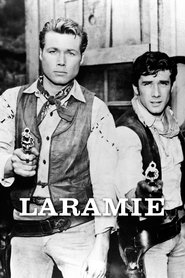
But success didn't let her settle back on her living room sofa. When the series ended, she joined the cast of the Western Laramie in 1961. She played Daisy Enright and brought a touch of domestic warmth to a series full of gunfire and dust. She kept working with the same technical precision she had shown during her theater years in New York.
In her private life, she was an extremely cultured woman who spoke several languages. She enjoyed investing in the stock market and studying metaphysics in her free time. She never remarried after her divorce in 1924. She preferred to keep her independence and manage her own finances without explaining herself to anyone.
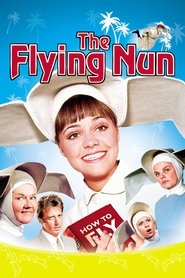
Her last on-screen appearance was in an episode of the series The Flying Nun in 1968. By then her health was beginning to fail, but she kept the mental sharpness that had always defined her. She died of cancer at her home in the Hollywood Hills in 1971.
She donated her body to science for medical research at the University of California.